Greycouch I
그레이카우치 I
Location
Seongsan-dong, Mapo, Seoul · 서울 마포구 성산동
Program
House + office · 단독주택, 제2종 근린생활시설(사무소)
Area
Site 66㎡ · Building 35.45㎡ · Floor 129.38㎡ · 4F + attic
Year
2017 (sold June 2020) · 2017년 사용승인, 2020년 6월 매각
Role
Site acquisition, design, construction, operation, sale · 매입, 설계, 시공, 운영, 매각
A house stacked four floors high, starting from a single couch.
소파 하나에서 시작해 4층까지 쌓아 올린 집입니다.
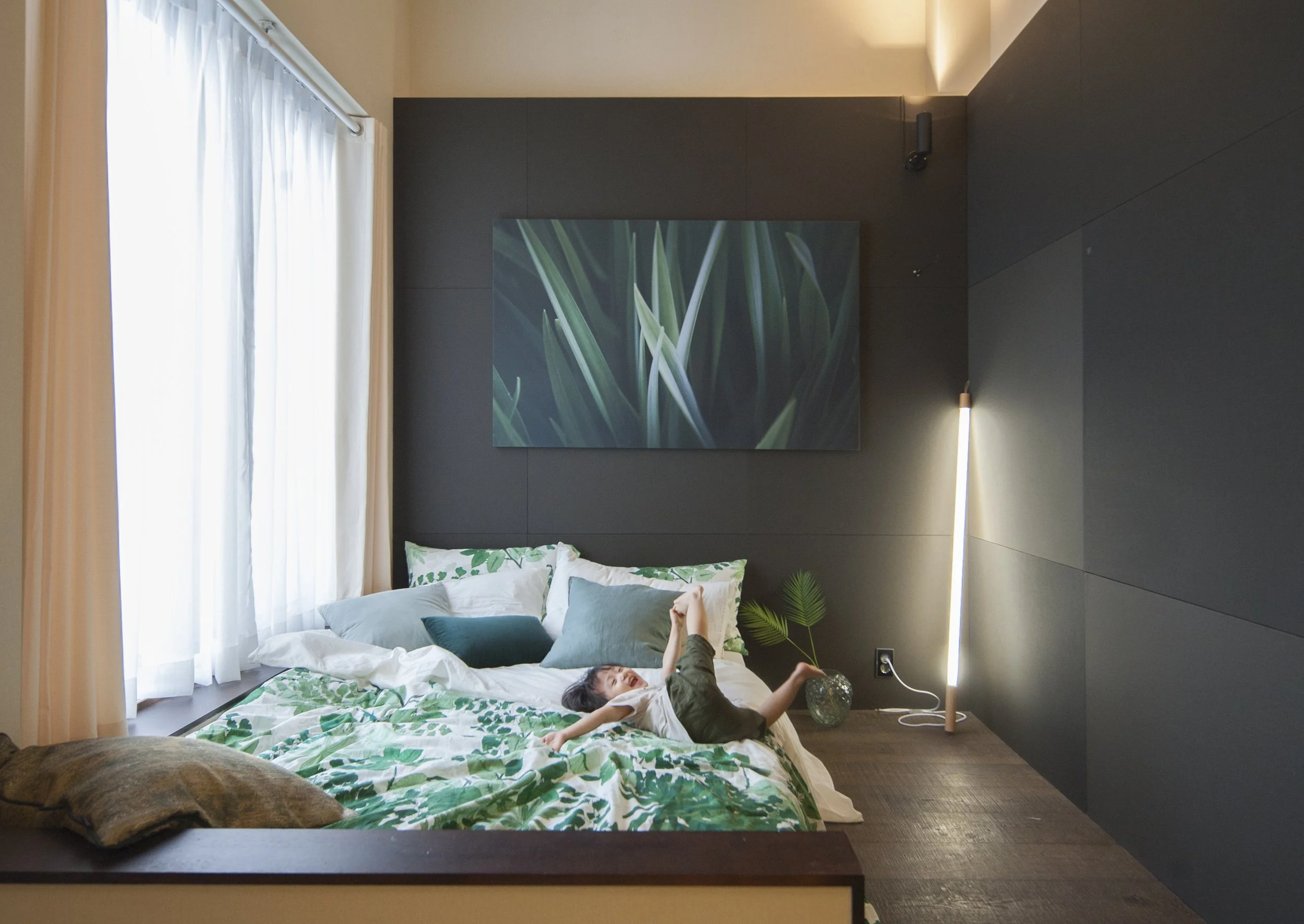
Starting from a Couch
카우치에서 시작한 집
Greycouch was my first development project. I bought the land, designed the building, built it, ran it and sold it. It began with a question about order: we usually draw the largest building the lot allows and divide the inside afterward. I wanted to start from the space a person needs and let the outside follow.
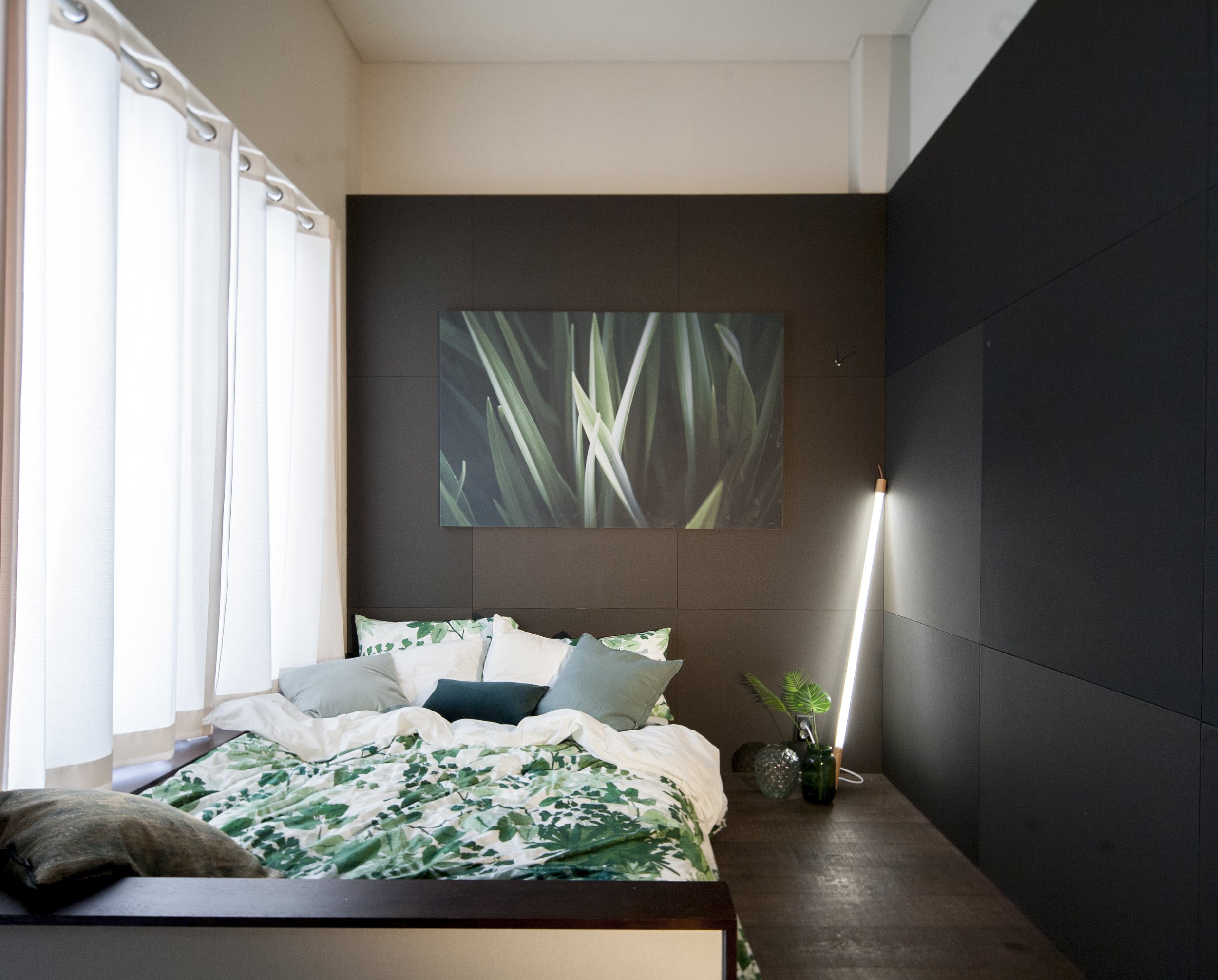
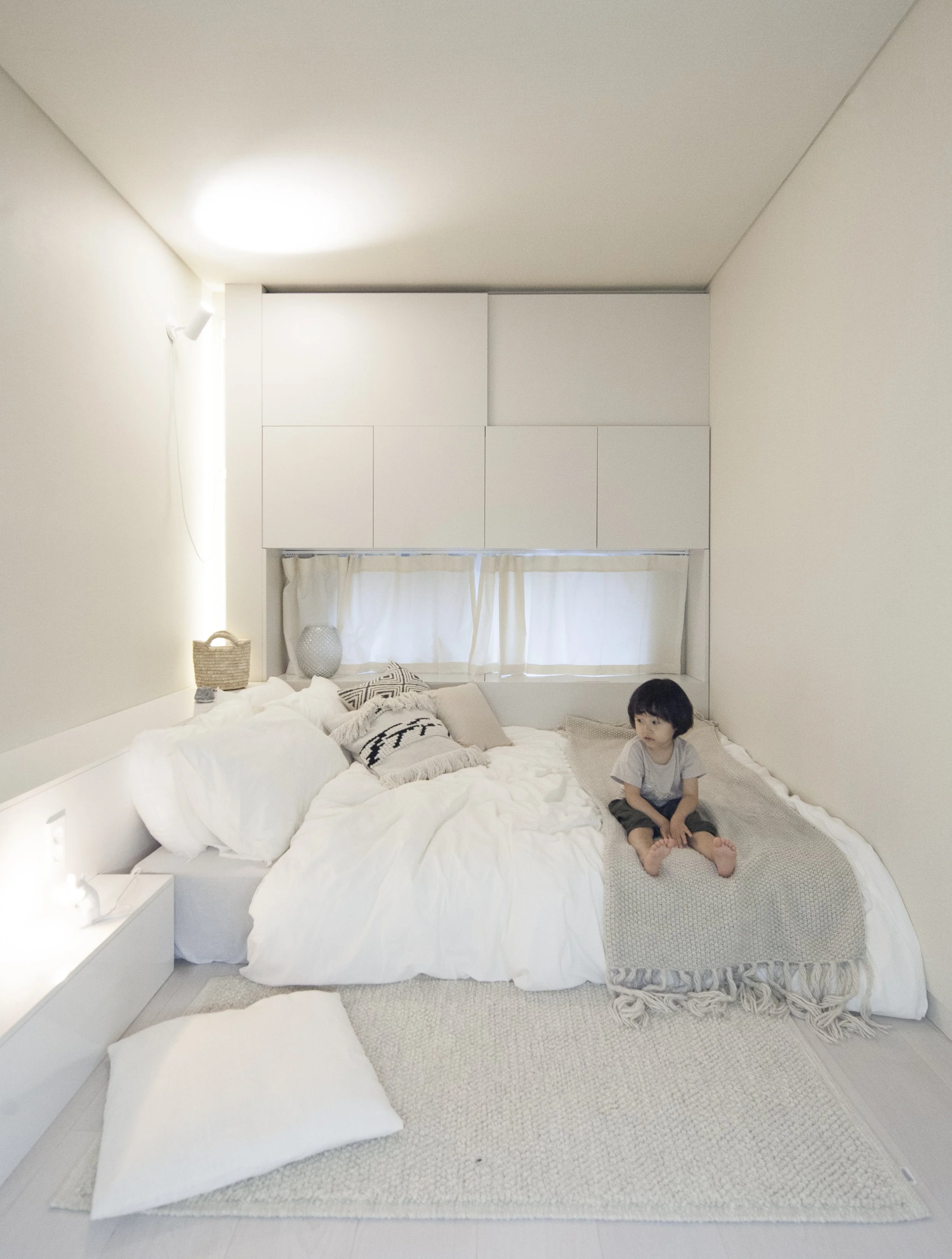
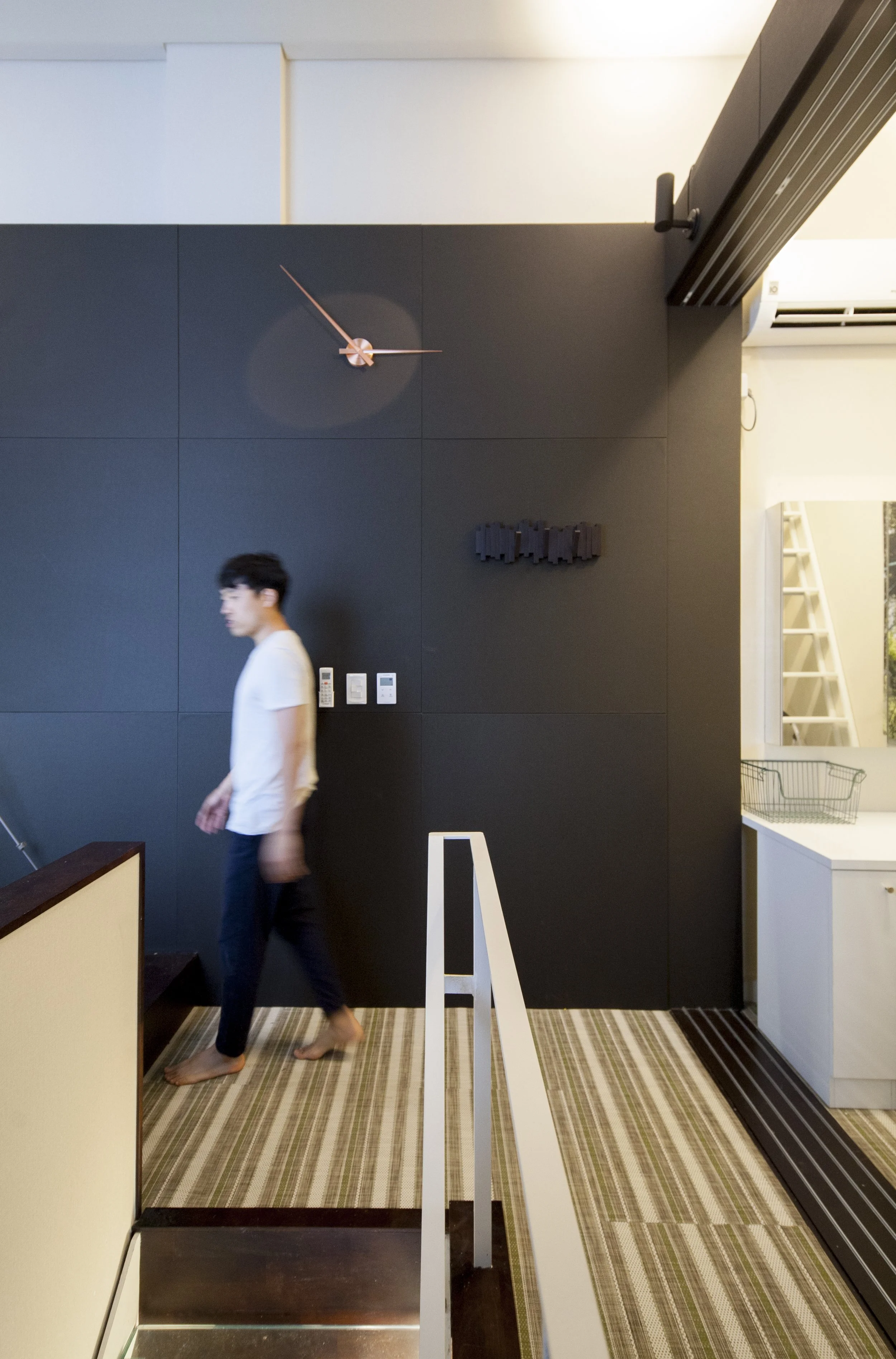
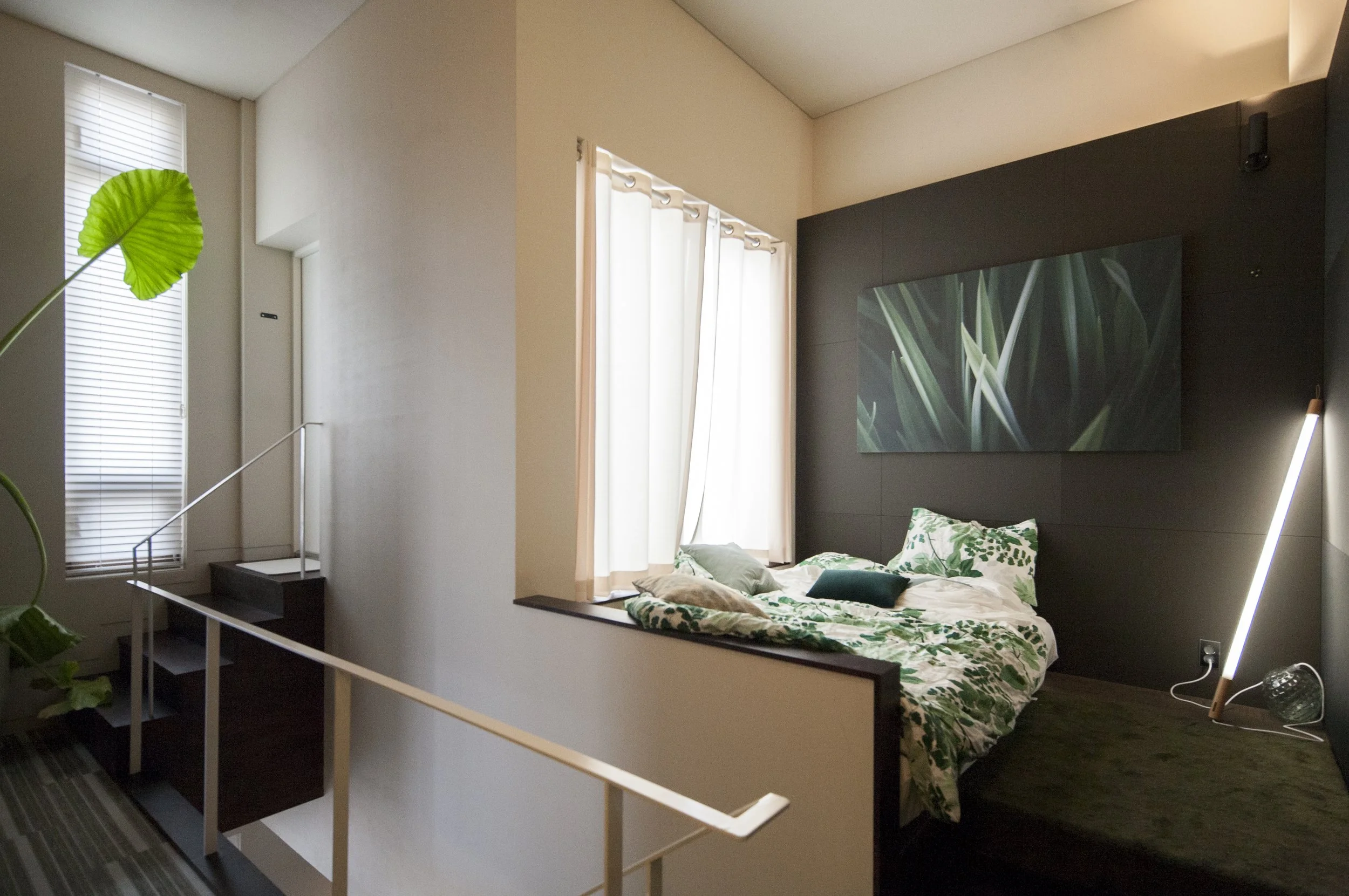
For me the smallest space where that need begins is a couch, a piece of furniture where you can eat, sleep, play, rest, study and work. That is why the building carries its name. The couch and the TV stand came first, on the third floor, so that the rooms on the second and fourth floors could reach them easily. The kitchen and dining area went beside the couch. One room went on the second floor and one on the fourth, each with a toilet and shower next to it, so no one has to climb the stairs in the middle of the night.
Greycouch는 저의 첫 시행 프로젝트입니다. 땅을 사고, 설계하고, 짓고, 운영하고, 팔기까지 전 과정을 직접 했습니다. 출발점은 순서에 대한 질문이었습니다. 우리는 보통 땅에 지을 수 있는 최대의 건물을 먼저 그리고 그 안을 나눕니다. 저는 사람에게 필요한 공간에서 시작해 바깥이 따라오게 하고 싶었습니다.
공간이 필요해지는 시작점에 있는 최소한의 공간은, 저에게는 먹고, 자고, 놀고, 쉬고, 공부하고, 일할 수 있는 카우치라는 가구입니다. 그래서 건물의 이름을 카우치라고 지었습니다. 카우치와 그 앞의 TV장을 가장 먼저 놓았고, 그 자리는 2층과 4층의 방 어디에서든 쉽게 오갈 수 있는 3층입니다. 카우치 옆에는 주방과 다이닝을 두었습니다. 방은 2층과 4층에 하나씩 두었고, 방 옆에는 화장실과 샤워실을 붙여 자다가 계단을 오르내리지 않게 했습니다.
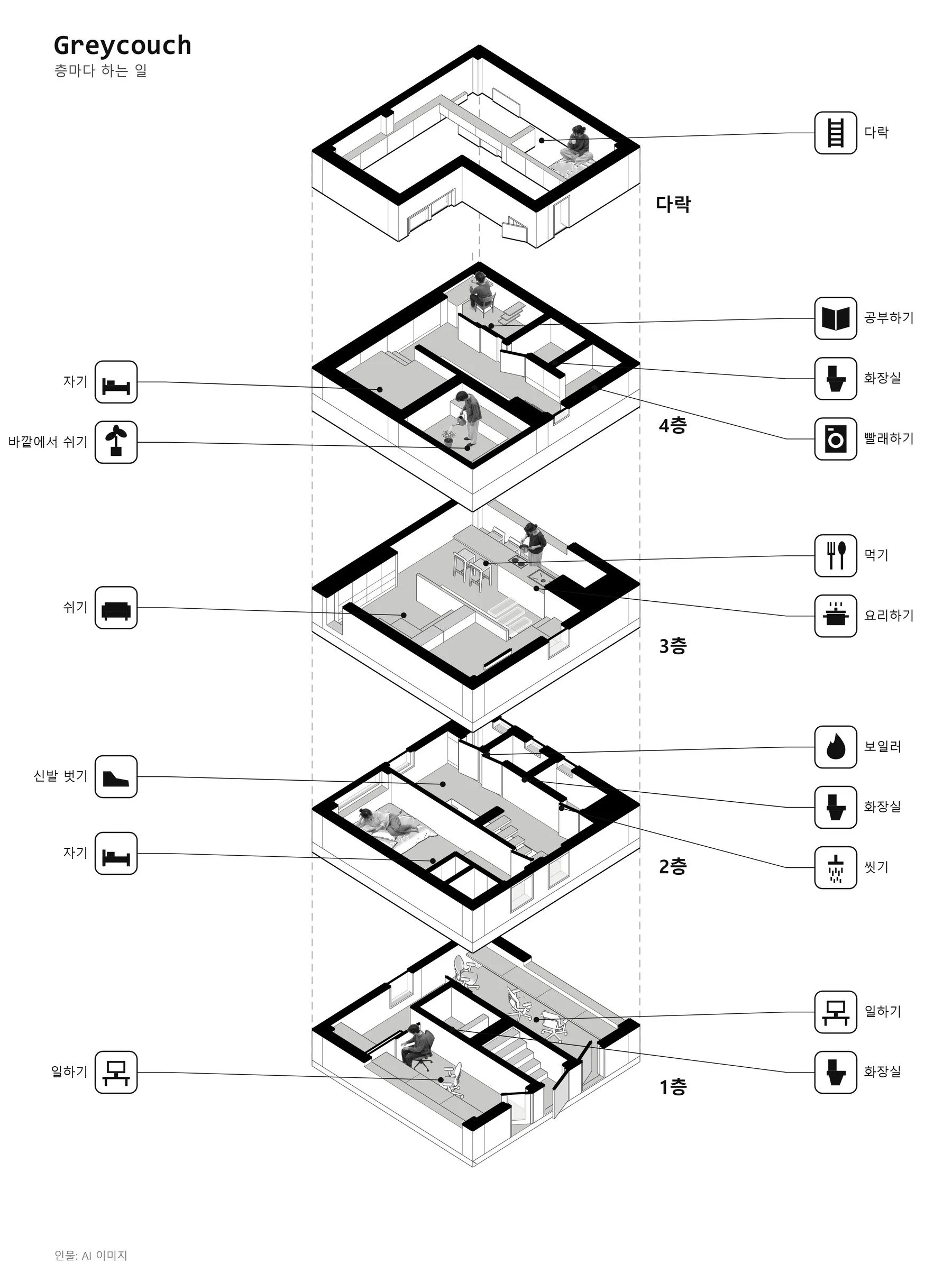
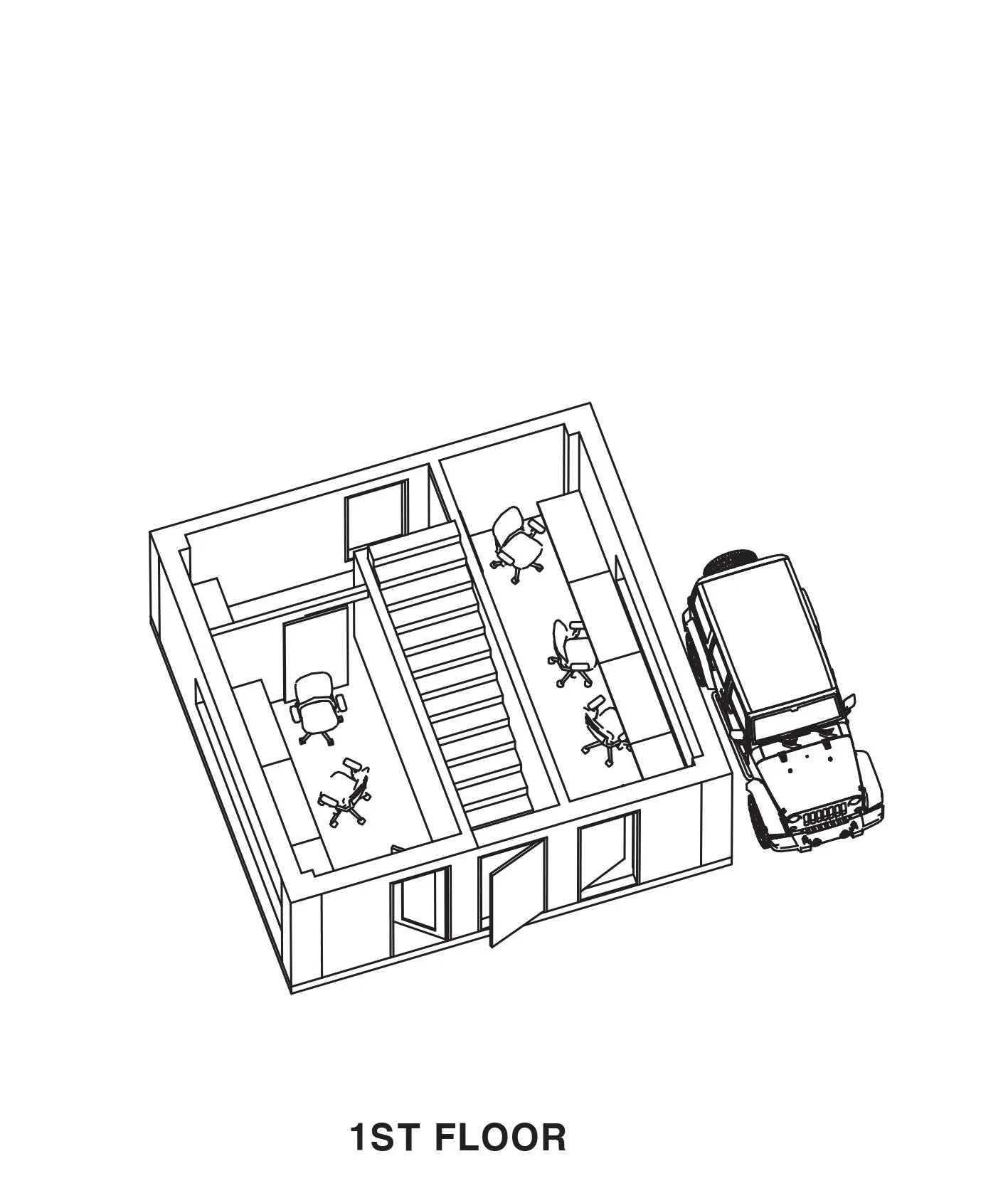
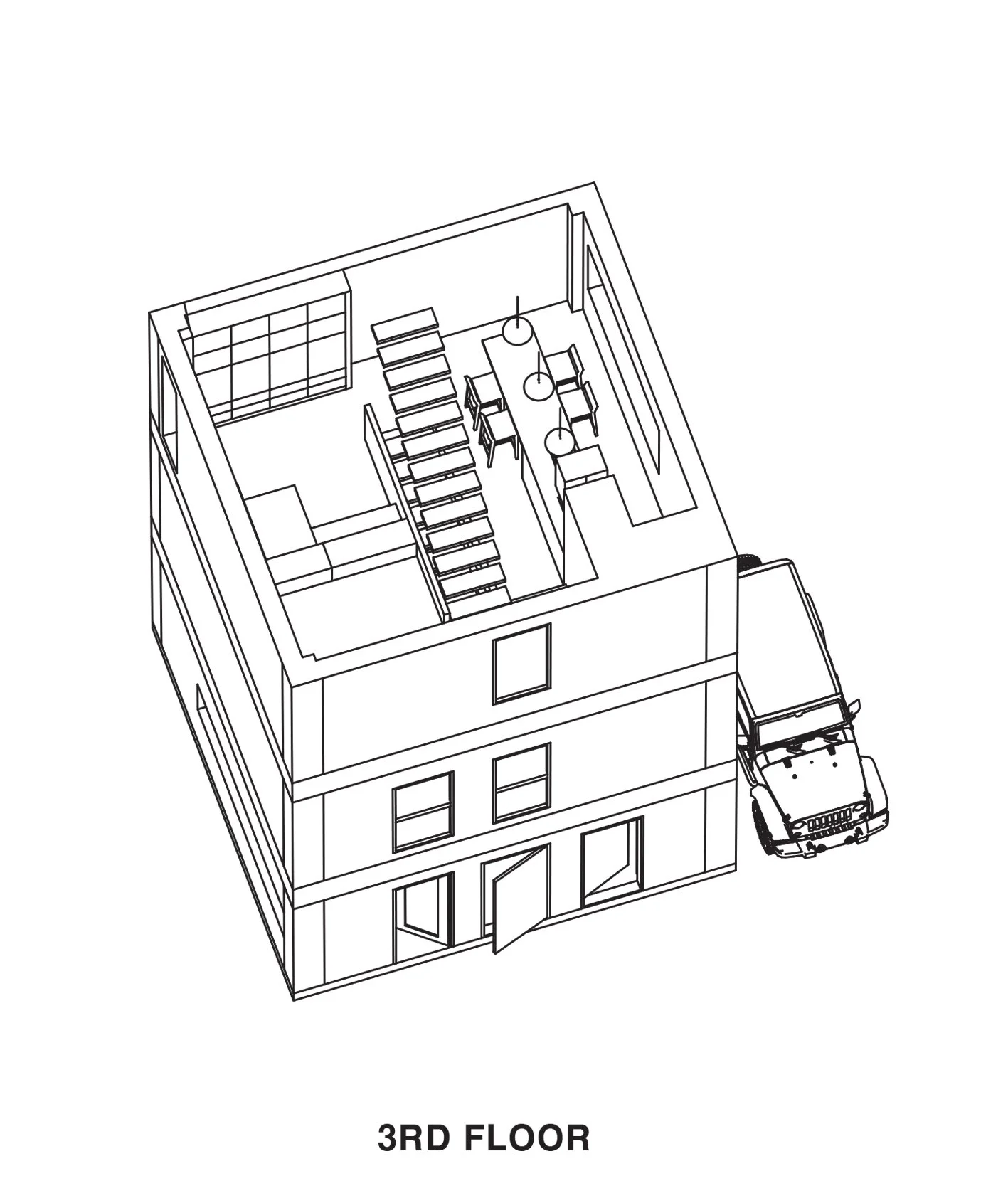
Floor by floor · 층마다 하는 일 · figures: AI image
Eight Containers
컨테이너 여덟 개
The first scheme stacked short container modules four high on both sides of a central stair, eight in all. But containers could not be the structure here, and using them only as a skin seemed to me to have no meaning, so I gave the idea up. The stair in the middle stayed, and so did the boxes stacked on either side of it.
처음 안은 가운데 계단을 기준으로 양쪽에 짧은 컨테이너 모듈을 4층씩, 모두 8개 쌓아 올리는 것이었습니다. 그런데 컨테이너가 구조가 될 수 없었고, 껍데기로만 컨테이너를 쓰는 것은 의미가 없다고 판단해 포기했습니다. 가운데 계단과 그 양쪽에 층층이 쌓인 상자는 지어진 집에 그대로 남았습니다.
The Stair That Divides
나누는 계단
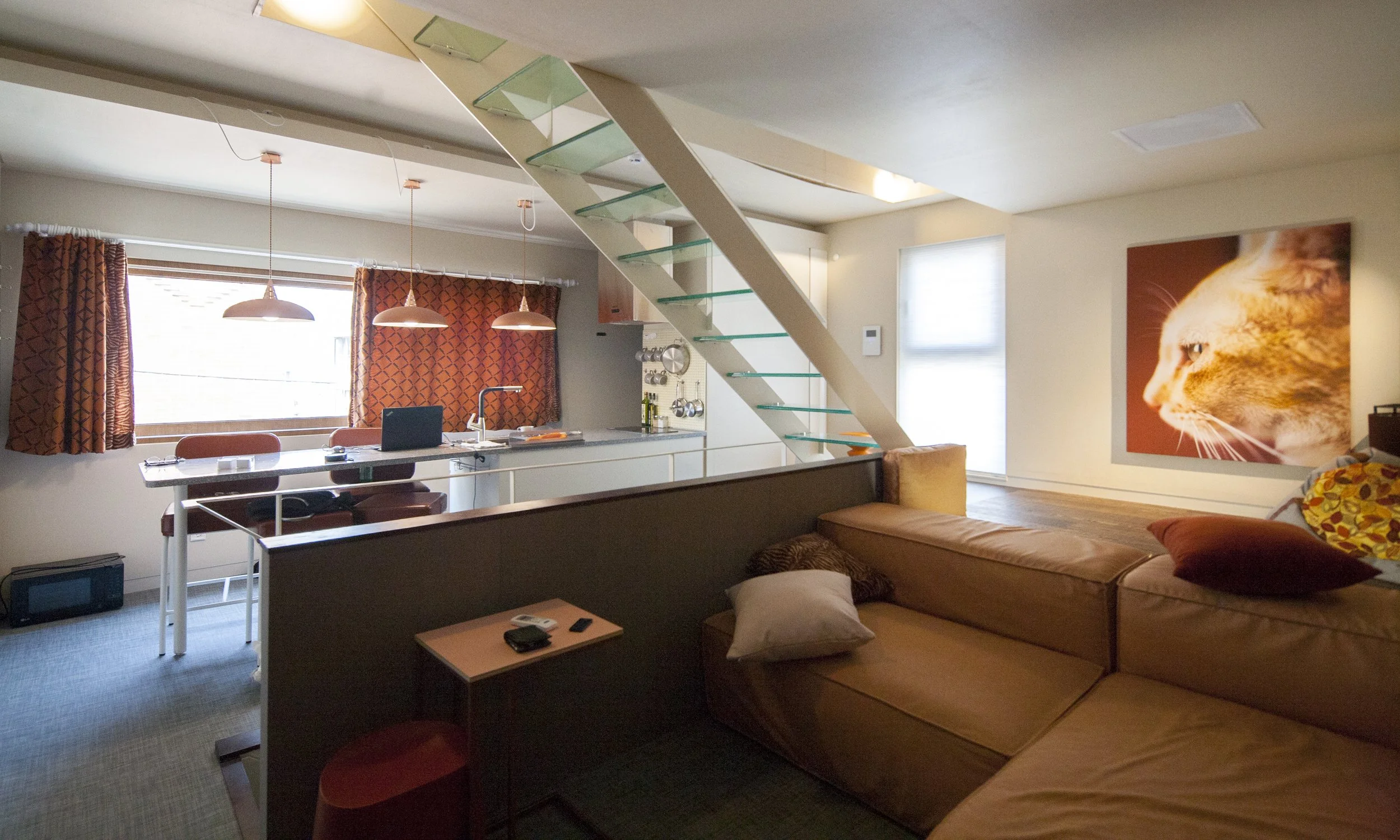
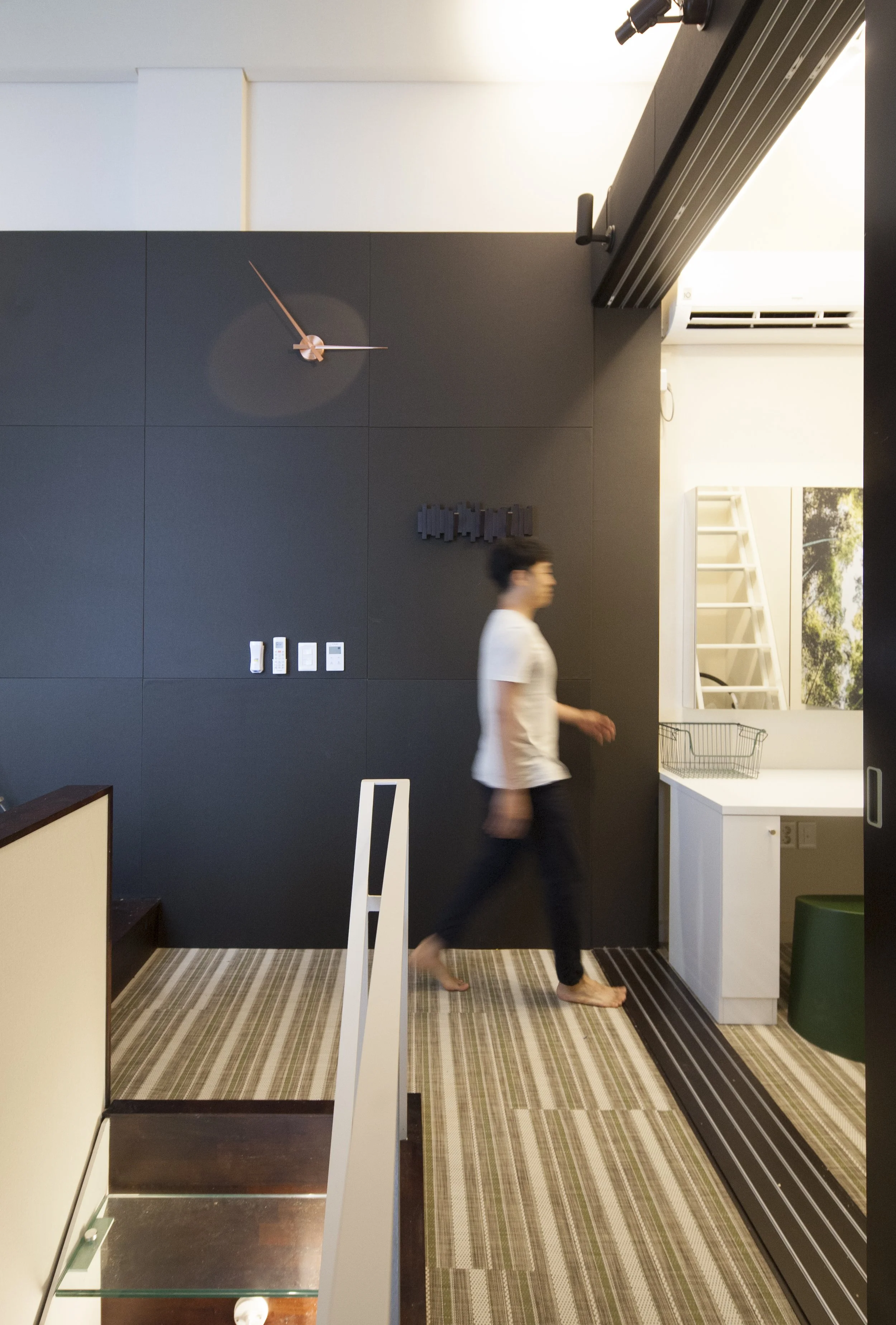
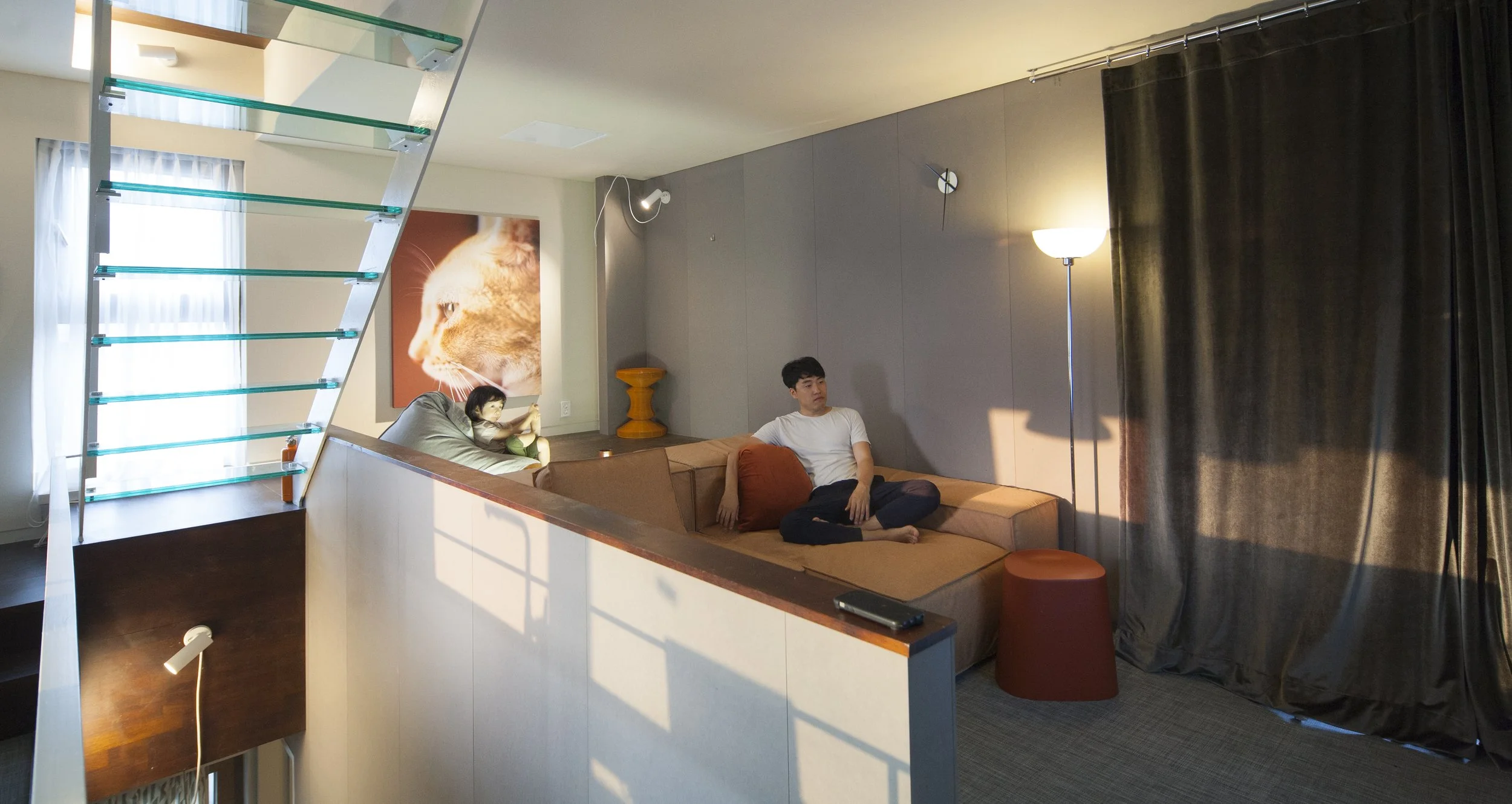
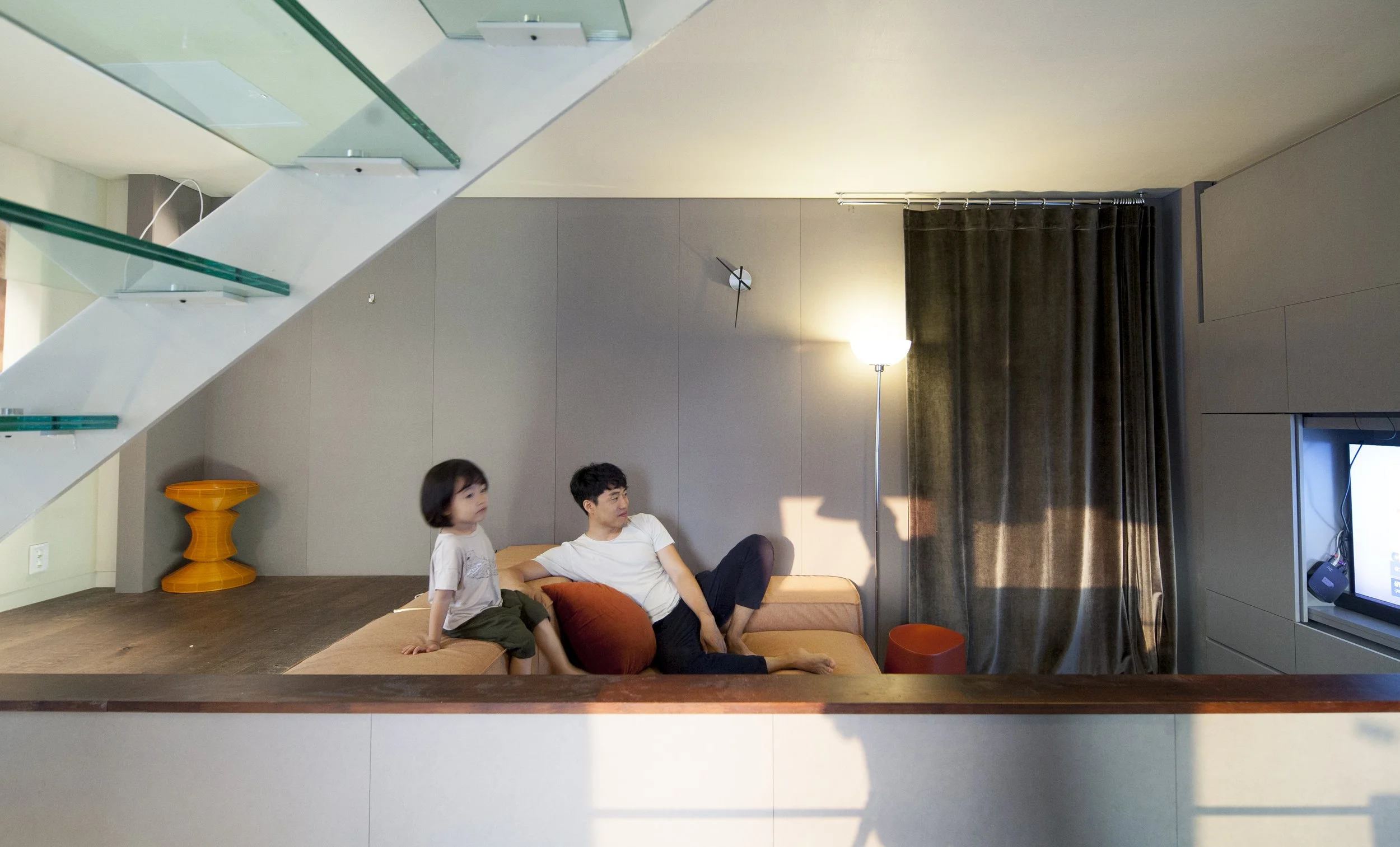
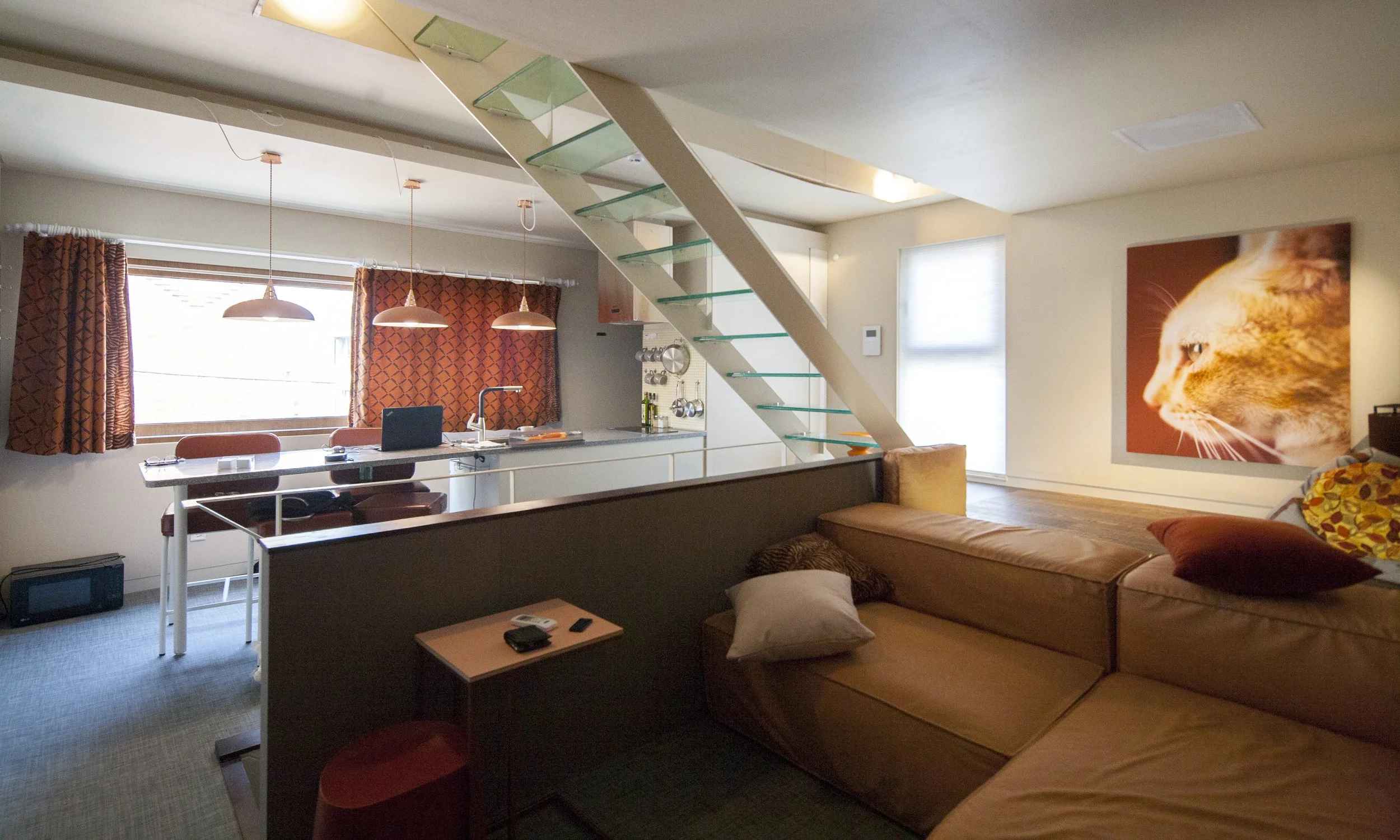
Most small buildings push the stair to one side to make the floor look larger. Here the stair stands in the middle, dividing each floor and keeping the distance you walk short. On the third floor it separates the kitchen from the living room, so ten pyeong holds two rooms where one large one might have been. People cooked and ate on one side while others watched TV and played board games on the other, up to ten people on one floor at the same time. The railing is the boundary between them.
An open floor would have brought a different kind of efficiency. I judged that apart from a living room, a house needs less empty floor than we think: a bedroom needs a suitable passage and space, a study needs room for a chair, and a shower and toilet need only the size they use.
한국의 일반적인 건축은 계단을 한쪽에 몰아 두고 공간이 넓어 보이게 합니다. 여기서는 계단을 가운데 두어 층마다 공간을 나누고 이동 거리를 줄였습니다. 3층에서는 계단이 주방과 거실을 갈라서, 10평 안에 큰 거실 하나 대신 주방과 거실을 따로 갖게 되었습니다. 한쪽에서 요리하고 밥을 먹는 사람들과 다른 쪽에서 TV를 보고 할리갈리를 하는 사람들까지, 3층 한 층에서 최대 10명이 동시에 지낼 수 있었습니다. 두 공간의 경계는 계단의 난간입니다.
텅 빈 바닥을 확보했다면 또 다른 방식의 효율이 있었을 겁니다. 하지만 텅 빈 넓은 바닥은 거실 말고는 생각보다 많이 필요하지 않다고 판단했습니다. 침실은 적당한 크기의 통로와 공간이면 되고, 공부방은 의자를 둘 만큼이면 되고, 샤워실과 화장실은 딱 필요한 크기만 있으면 됩니다.


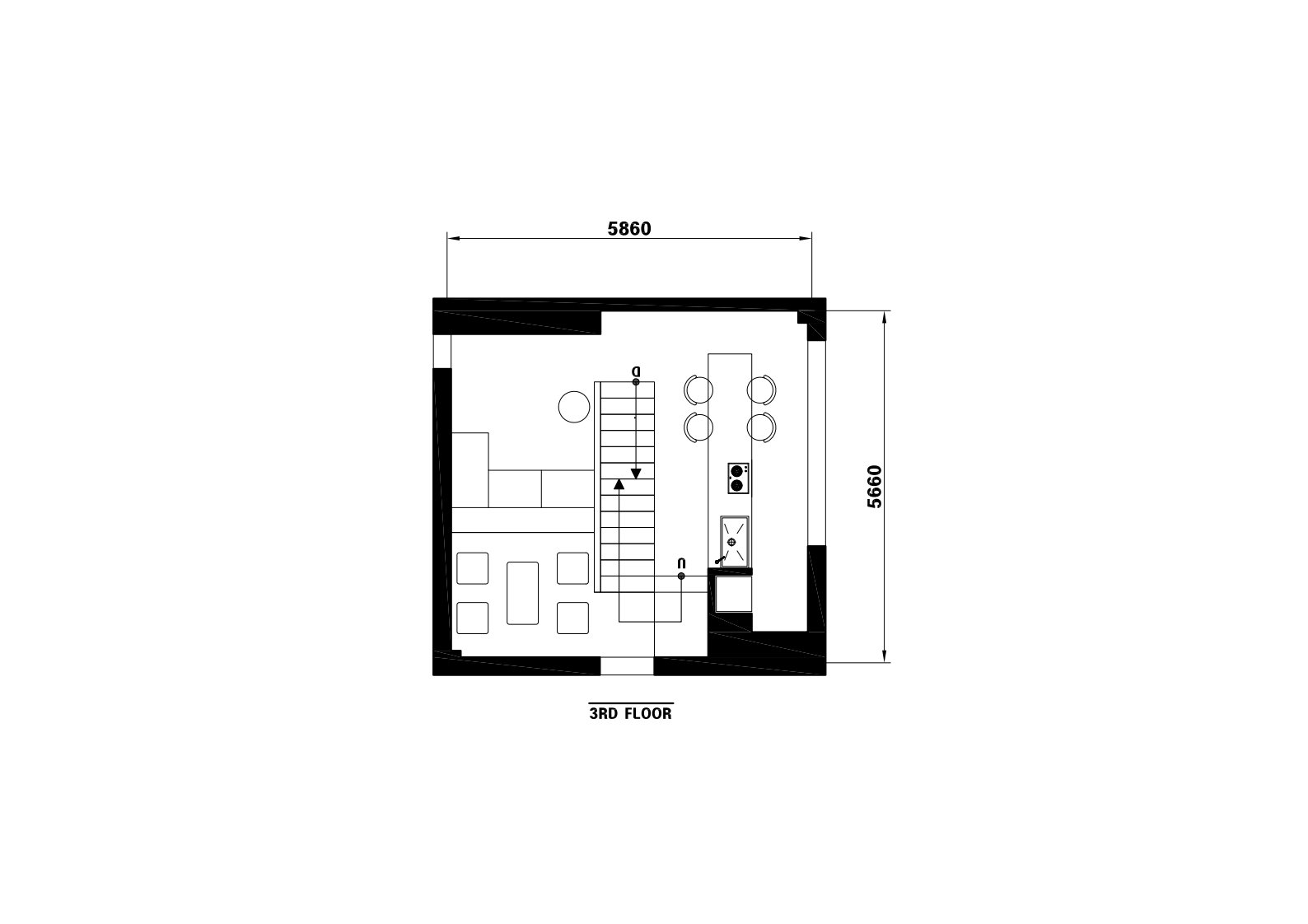
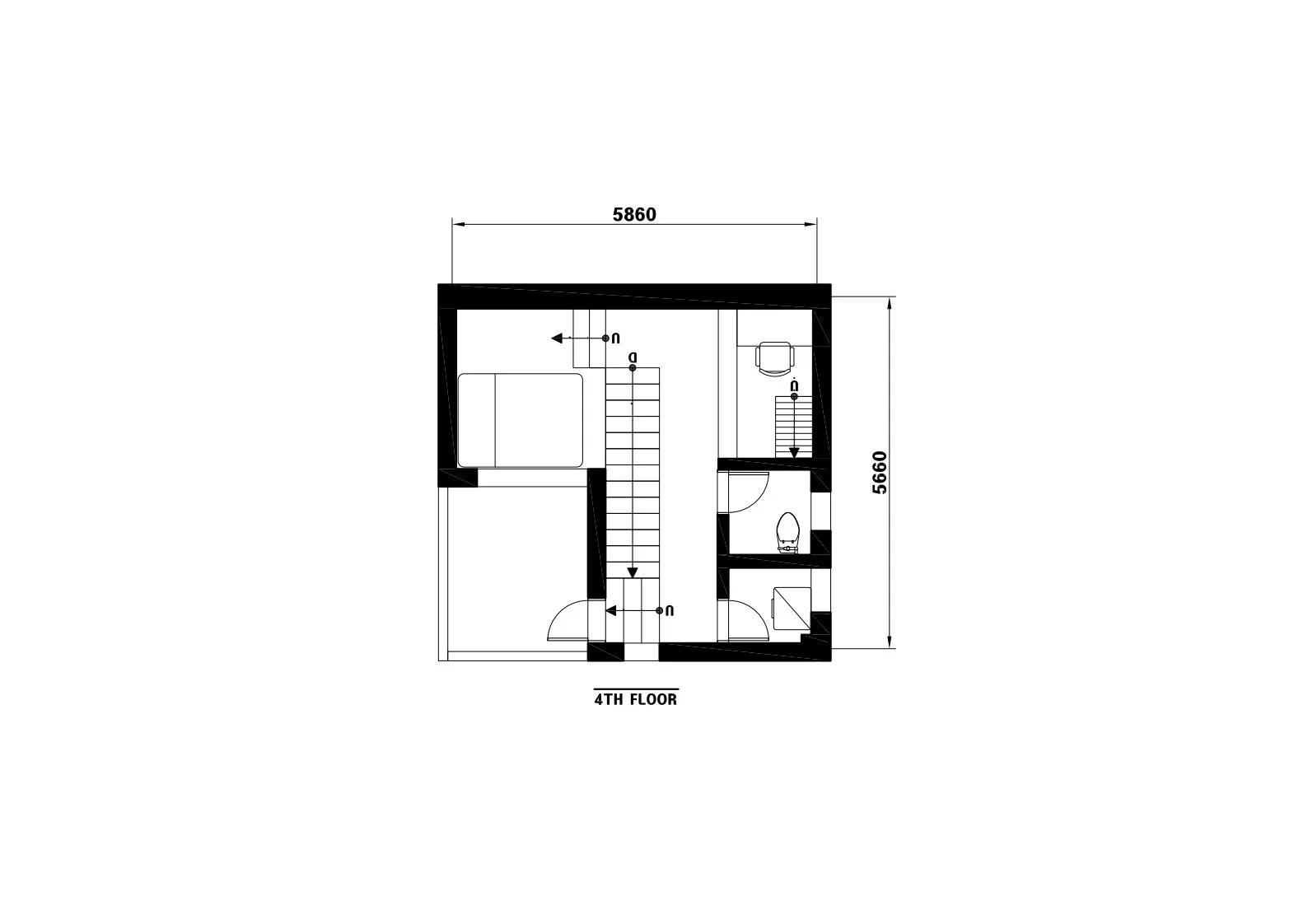
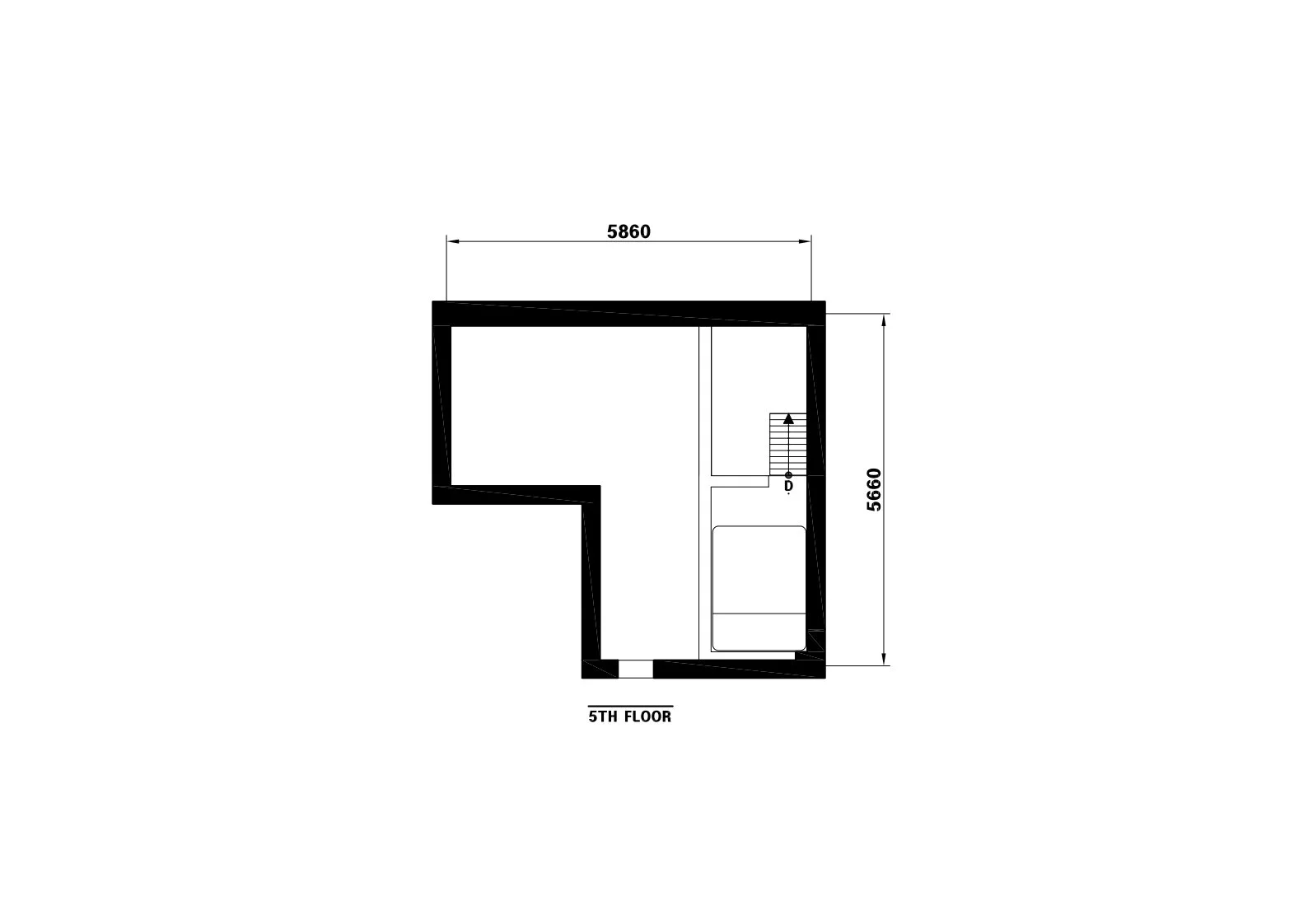
Plans · 평면도


Colorscheme
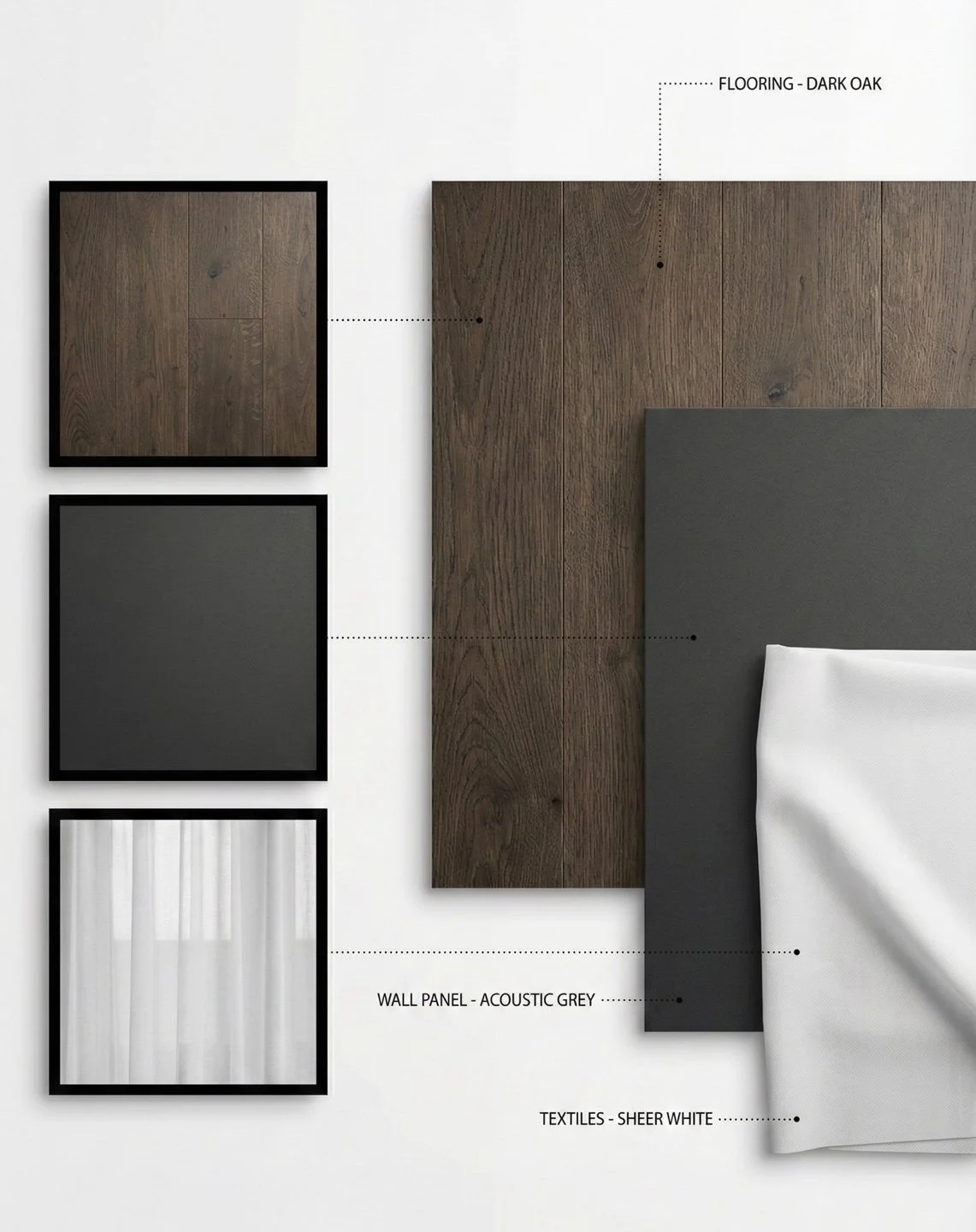
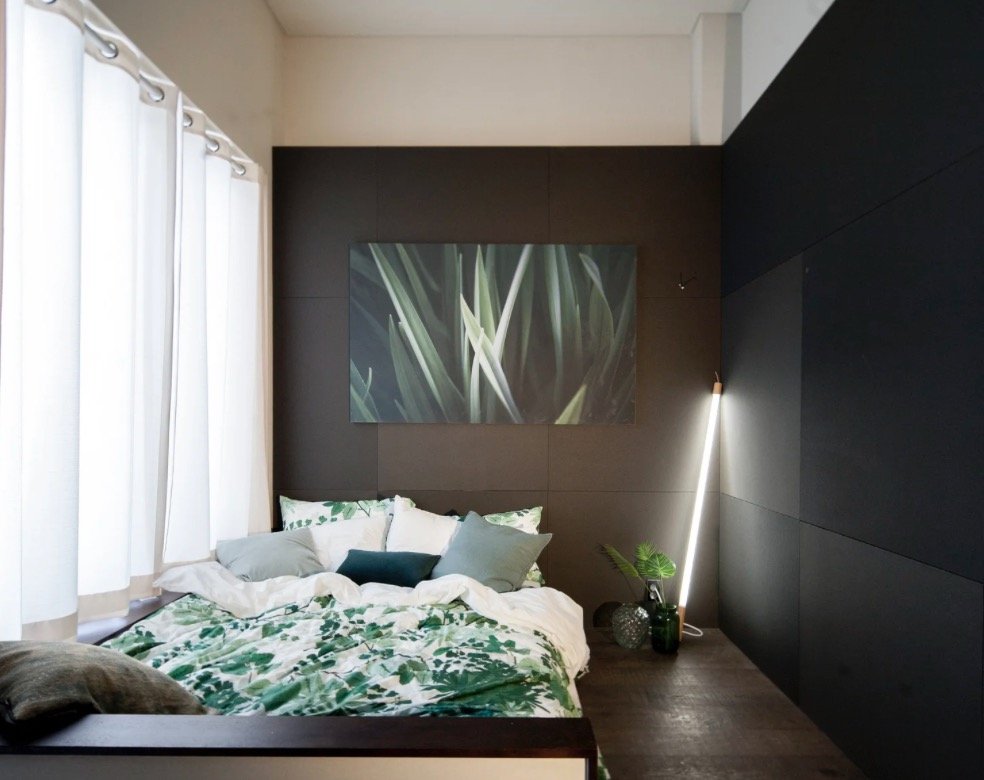
Bed room on 4th floor
Bed room on 2nd floor
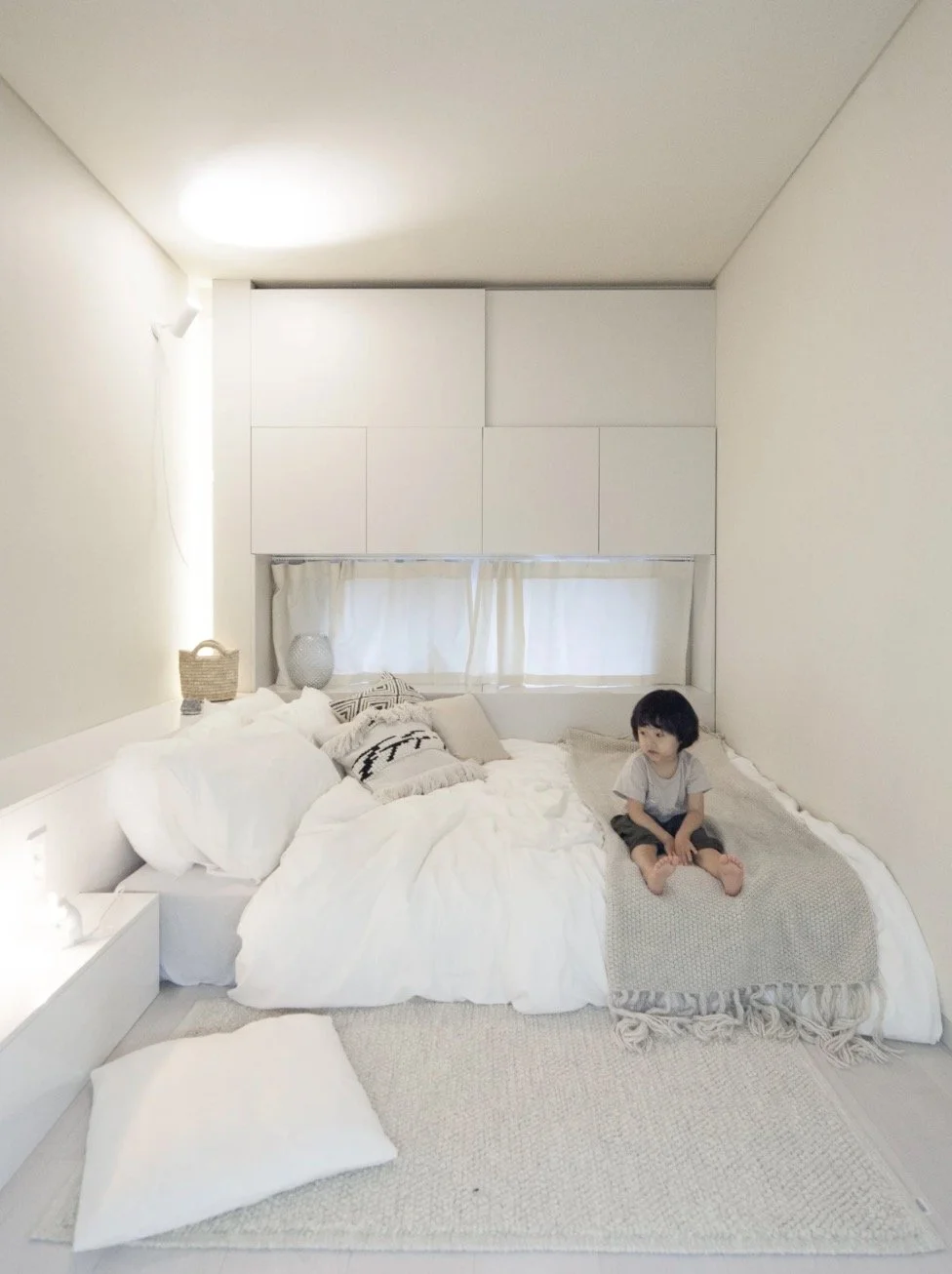
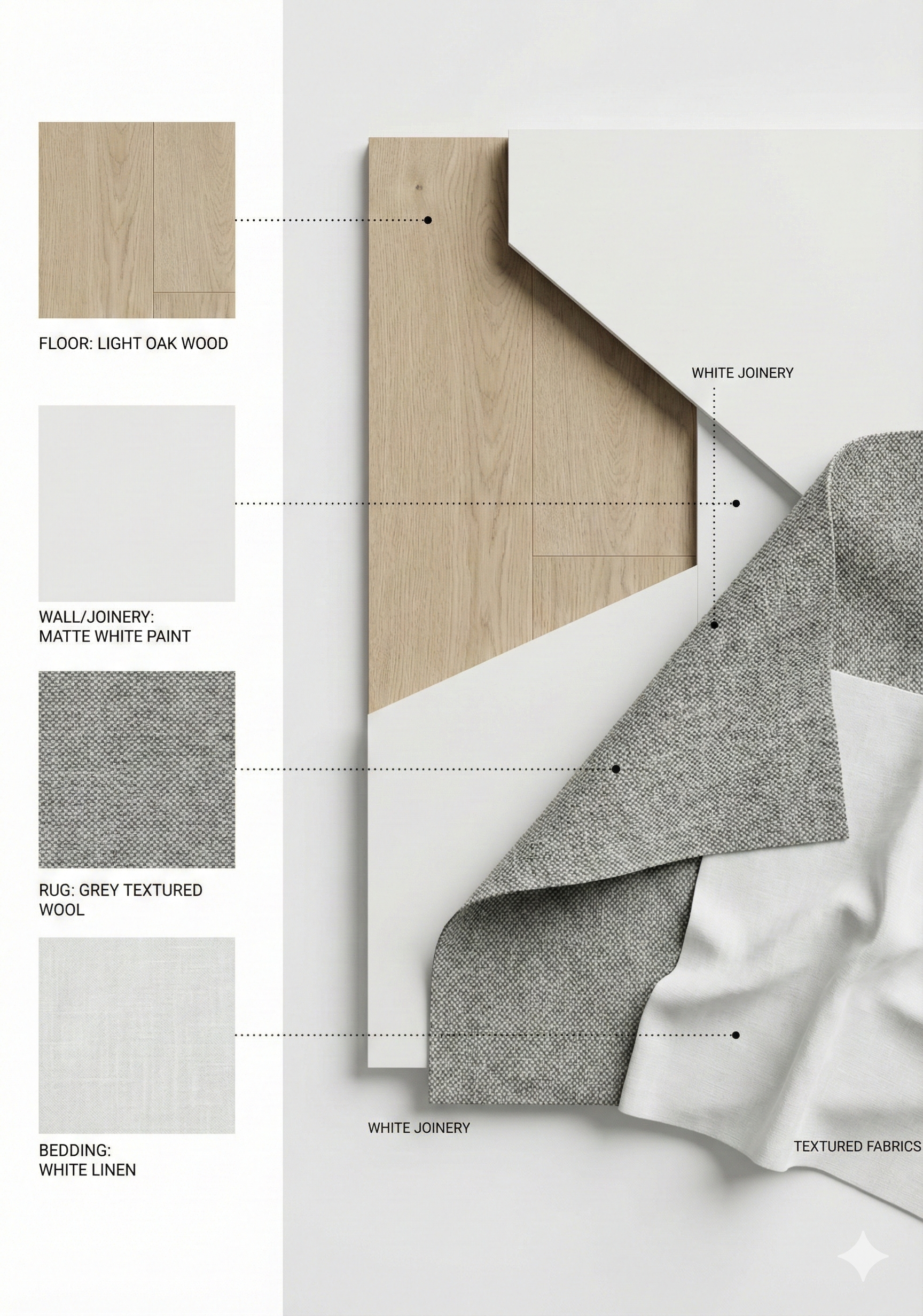
One Wall in the Bathroom
화장실의 벽 하나
A single wall stands between the toilet and the shower, so two people can use them at once. When they share one room, one person occupies both. I divided them with guests in mind, and it works the same way for people living here.
화장실과 샤워실 사이에 벽을 하나 세워, 두 사람이 한 번에 쓸 수 있게 했습니다. 한 공간에 있으면 한 사람이 두 기능을 한꺼번에 차지할 수밖에 없습니다. 민박업을 할 때를 생각해 나눴고, 주거로 쓸 때도 마찬가지입니다.
“변기와 샤워기가 한 공간에 있는 화장실은 공간 활용도는 높지만, 막상 두 사람이 함께 생활하기에는 불편하더라고요. 이 집은 혼자 사는 공간이 아니라 여러 명이 함께 사는 집이기 때문에, 화장실과 샤워실을 분리하는 게 훨씬 효율적이라고 생각했어요.”

Ariel Lee
“In most Korean bathrooms, the toilet and shower share the same space — it’s efficient, but not very practical when two people live together.
Since this house is meant for two or three people, I felt it was much better to separate the toilet and shower for comfort and usability.”
Letting the Eye Travel
시선을 멀리 보내기
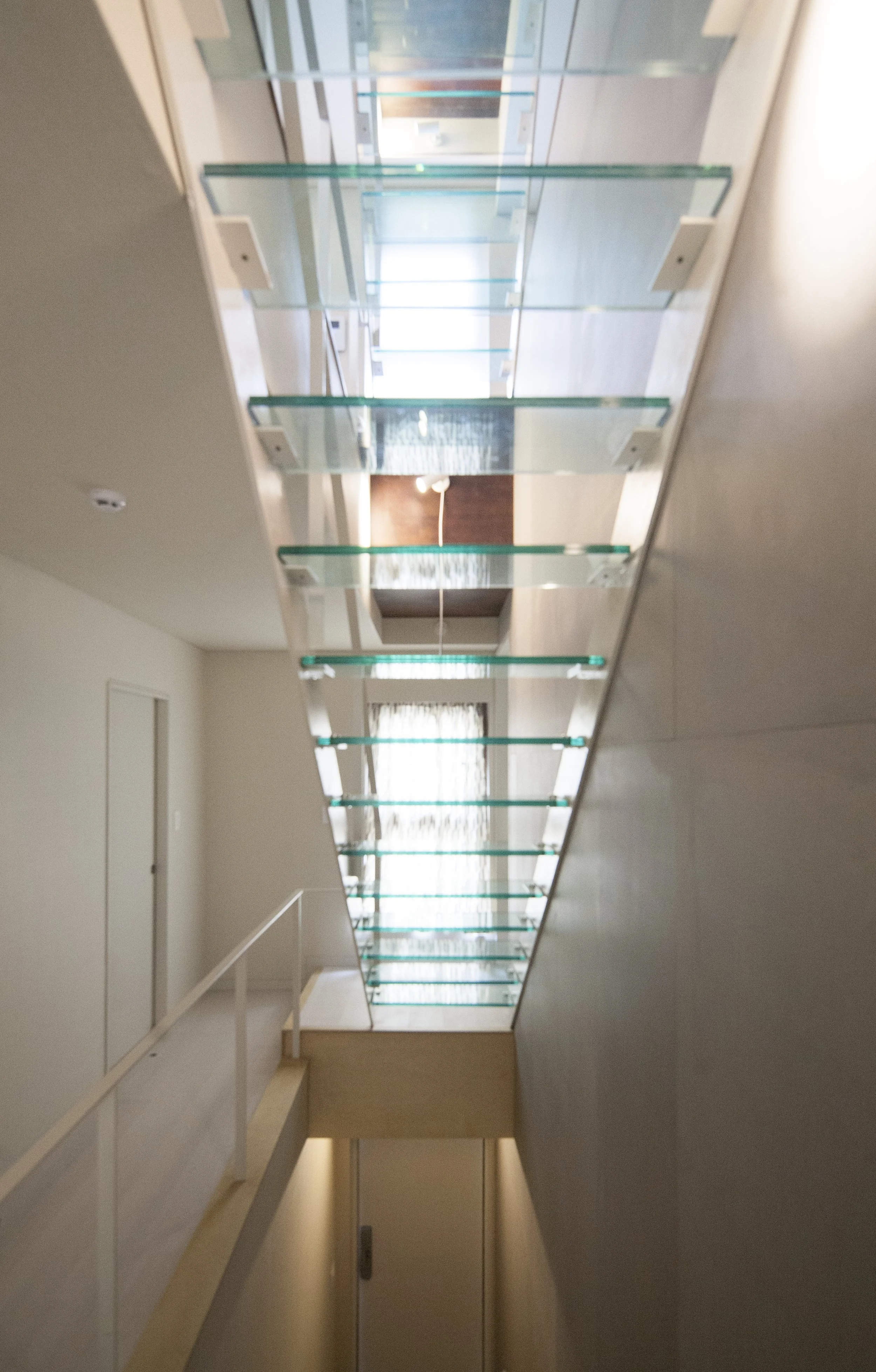
A tight plan can feel closed once it is divided. What can get past the limits of ten pyeong is the line of sight, so even when the body moves little, the eye can go far. The glass stair carries it vertically, more than 13 meters from the first-floor slab to the fourth-floor ceiling, and the windows carry it horizontally. The flight from the first to the second floor is 1.4 meters wide; above that it narrows to about 1 meter. From the top you can look down at a friend coming in on the first floor.
The discomfort I actually felt was different from what others imagined. Being seen through the glass did not bother me. The feel of glass under bare feet did, and the stair in my next house, Potato Alley, is finished in wood.
공간을 나누면 갑갑함이 생길 수 있습니다. 10평이라는 평면의 한계를 넘을 수 있는 것은 시선이 뻗어 나가는 것이라고 생각했습니다. 수직으로는 1층 바닥에서 4층 천장까지 13m 남짓 이어지는 유리 계단이, 수평으로는 창이 그 역할을 맡았습니다. 계단 폭은 1층에서 2층으로 오르는 구간만 1.4m이고, 2층부터는 1m 정도로 줄어듭니다. 위에서 1층으로 들어오는 친구의 얼굴을 내려다보는 것도 재미있는 경험이었습니다.
실제로 살며 겪은 불편은 남들이 짐작한 것과 달랐습니다. 저는 유리가 비쳐 보이는 것은 불편하지 않았습니다. 불편했던 것은 맨발에 닿는 유리의 촉감이었고, 그래서 다음 집인 Potato Alley의 계단은 나무로 마감했습니다.
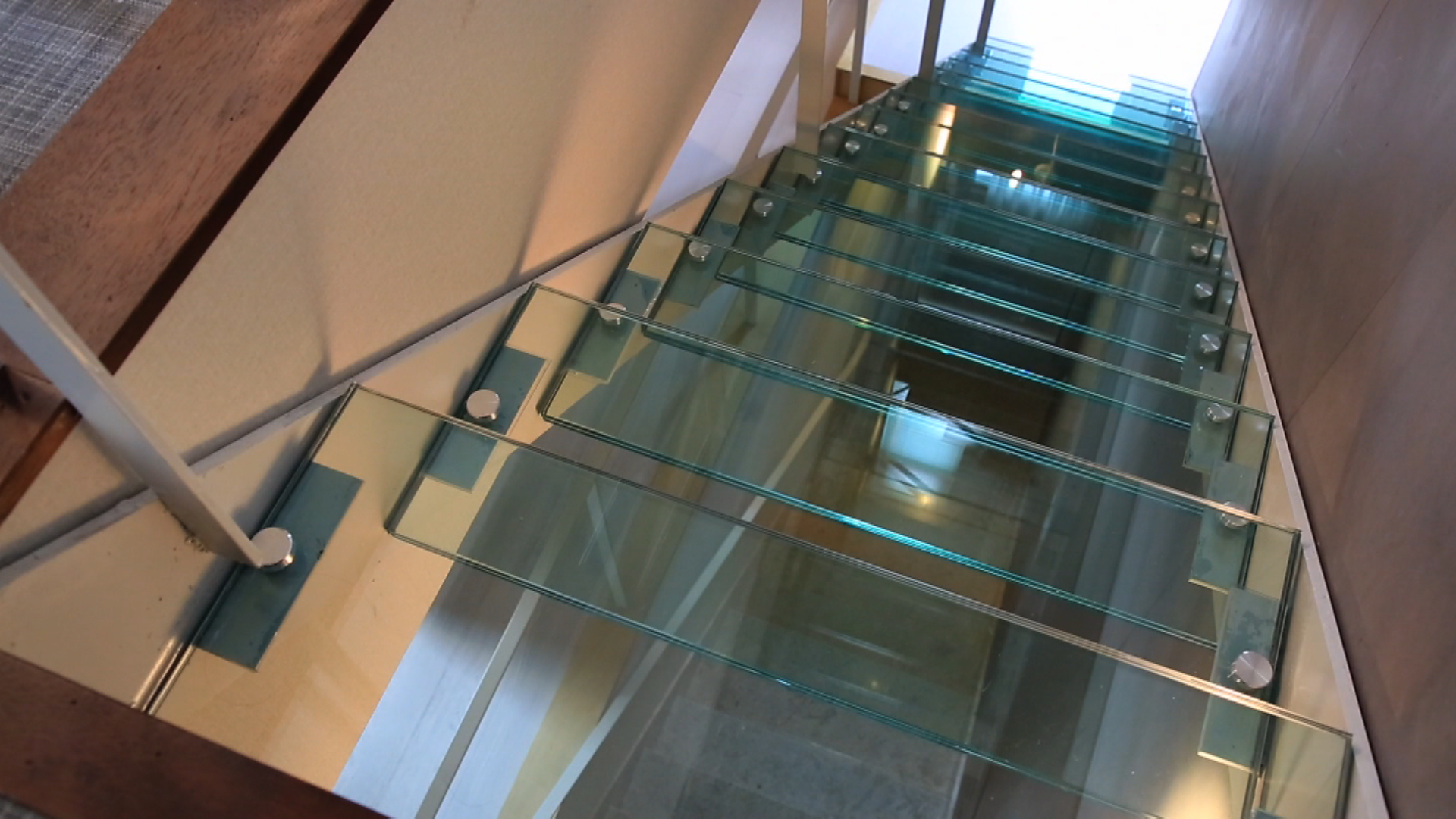
Glass stair · 유리 계단
Four Columns, Walls You Can Take Down
기둥 네 개, 헐어도 되는 벽
From the outside you can read how the building stands. Four concrete columns hold the corners, and inside the floors span without columns. Everything finished in cement brick can come down. The openings suit a house with an office below, but a later owner who wants a café or office with large windows on the first and second floors can remove those walls and keep the columns. The whole building could even be glass.
Brick is the outer layer, 60mm thick. Behind it are a 25mm air gap and a 150mm timber-framed insulated wall.
The bare cement brick was my own stubbornness. Exterior form should come from the spaces inside, and to say so I chose a material rarely used on a façade, one that looks as if no one had bothered with it. Nearly ten years later it shows almost no staining and looks much as it did when it was built, which I find a little ironic.
건물을 밖에서 보면 알 수 있듯이, 네 귀퉁이에 콘크리트 기둥이 서 있고 내부에는 기둥 없이 슬래브만 있습니다. 시멘트 벽돌로 마감한 면은 모두 헐어도 됩니다. 지금의 창은 위층을 살림집으로 쓰는 상가주택에 맞춘 것이지만, 나중에 주인이 바뀌어 1층과 2층에 큰 창을 낸 카페나 사무실을 하고 싶다면 기둥만 남기고 벽을 헐면 됩니다. 건물 전체를 유리로 만들어도 됩니다.
벽돌은 두께 60mm의 바깥 켜이고, 그 안쪽으로 25mm 공기층과 150mm 목구조 단열 벽이 있습니다.
마감하지 않은 시멘트 벽돌을 쓴 것은 그때의 제 고집이었습니다. 형상은 내부에서 필요한 공간이 쌓이면서 만들어진다는 것을 보여 주려고, 외장재로는 잘 쓰지 않는, 아예 신경 쓰지 않은 듯한 재료를 일부러 골랐습니다. 10년 가까이 지난 지금 가 봐도 때가 탄 흔적이 거의 없어 지었을 때와 차이가 없다는 점이 아이러니합니다.
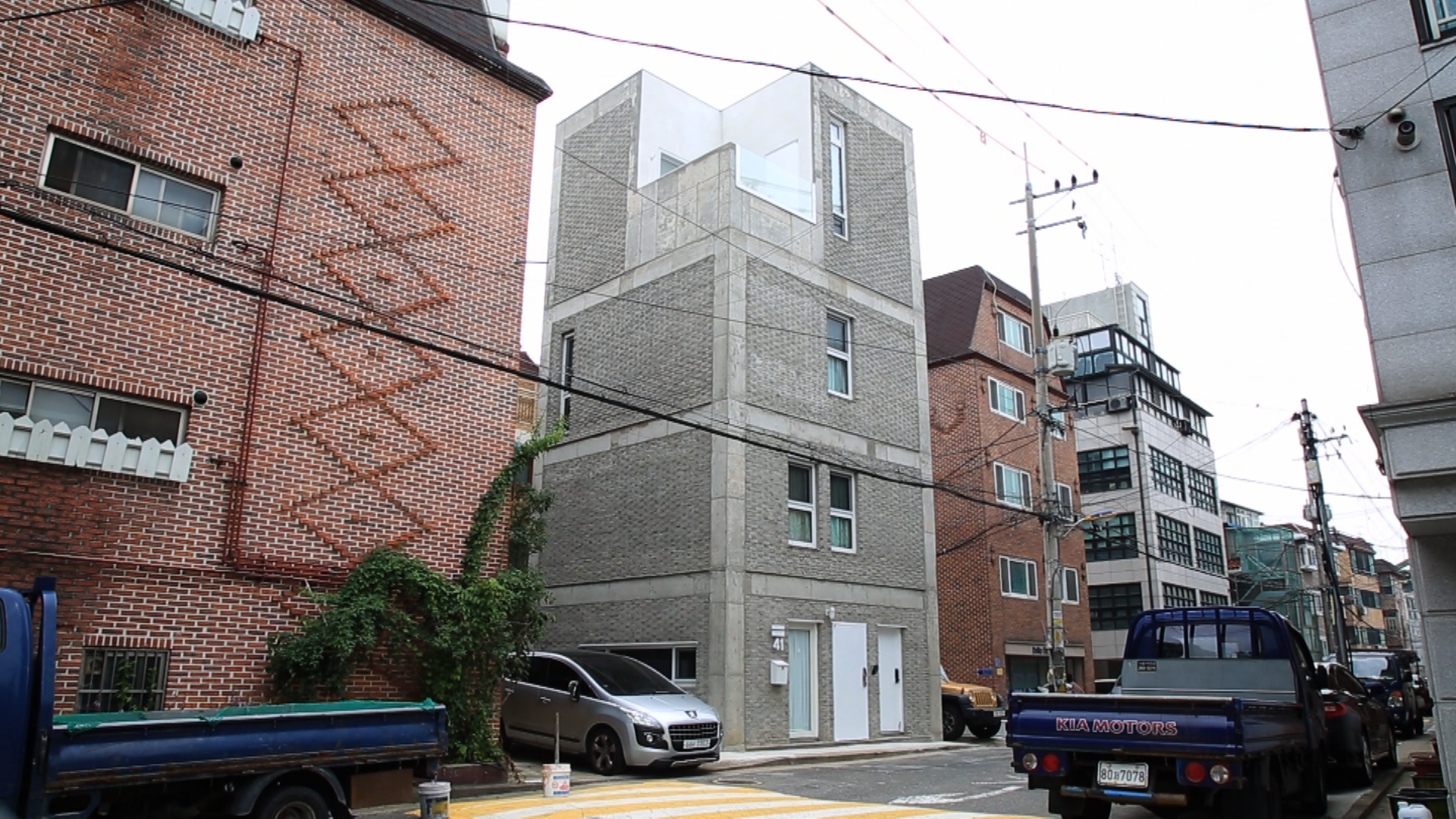
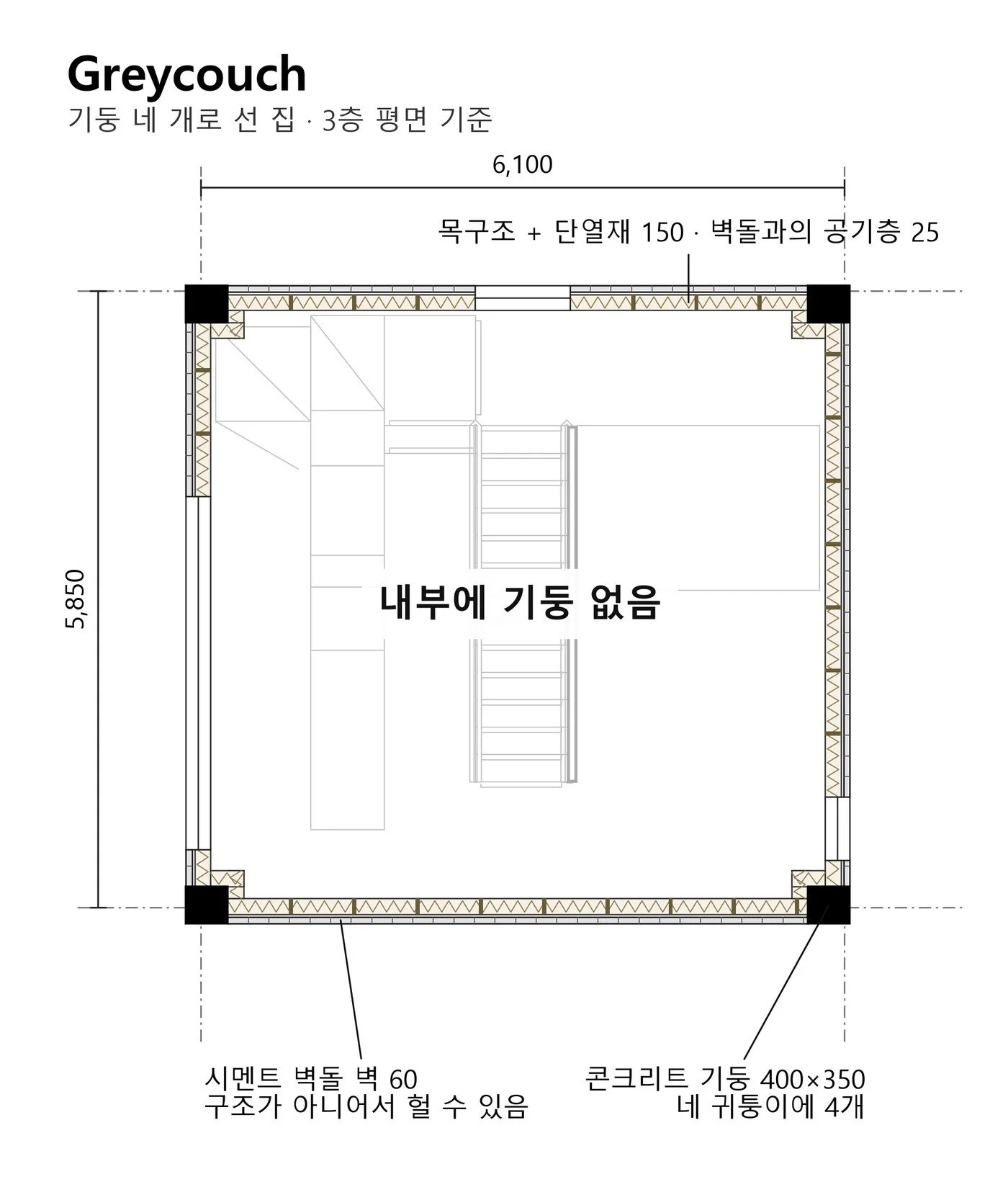
Four columns and wall layers · 기둥 네 개와 벽체 레이어
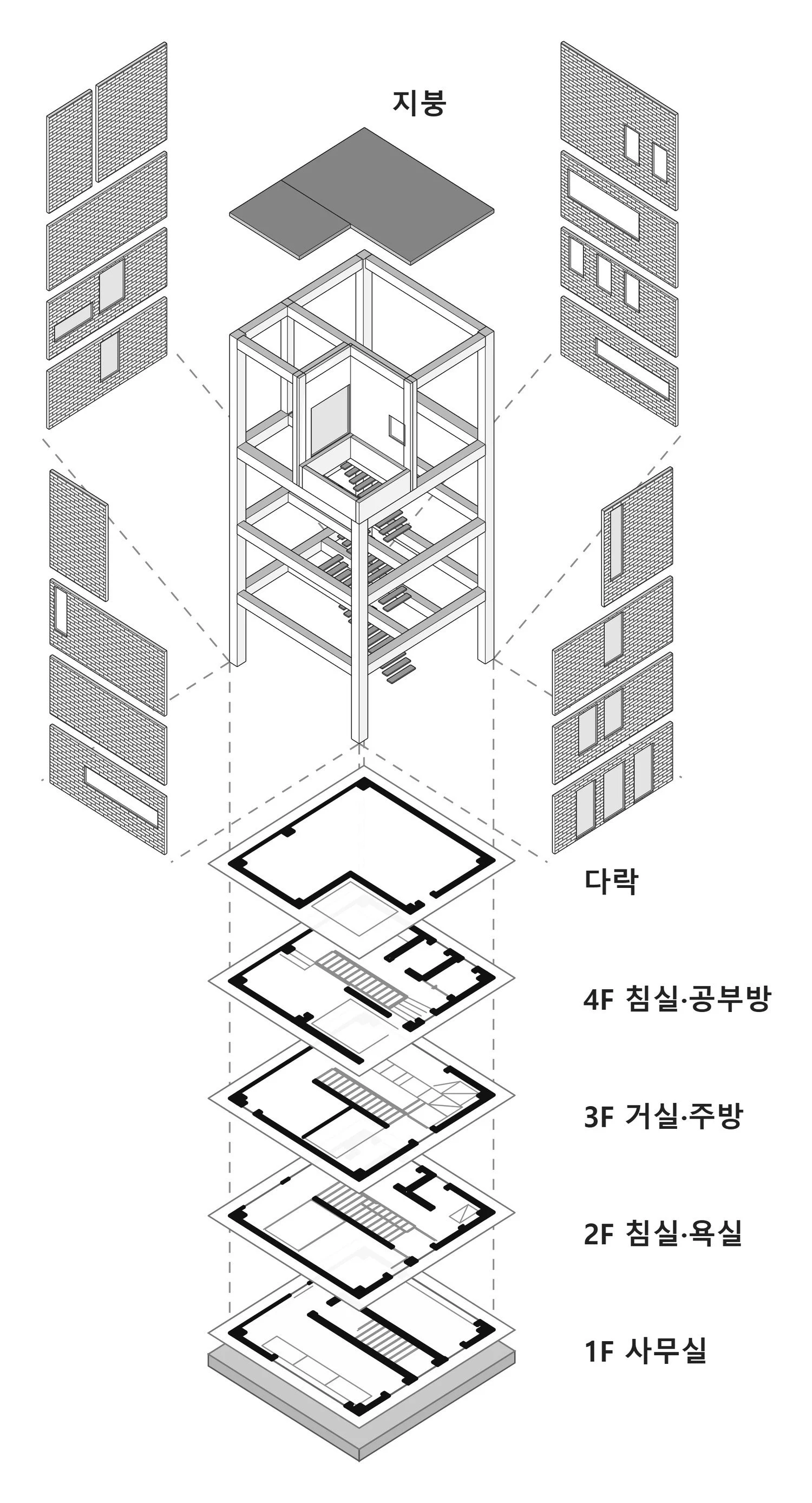
Exploded axonometric · 분해 액소노메트릭
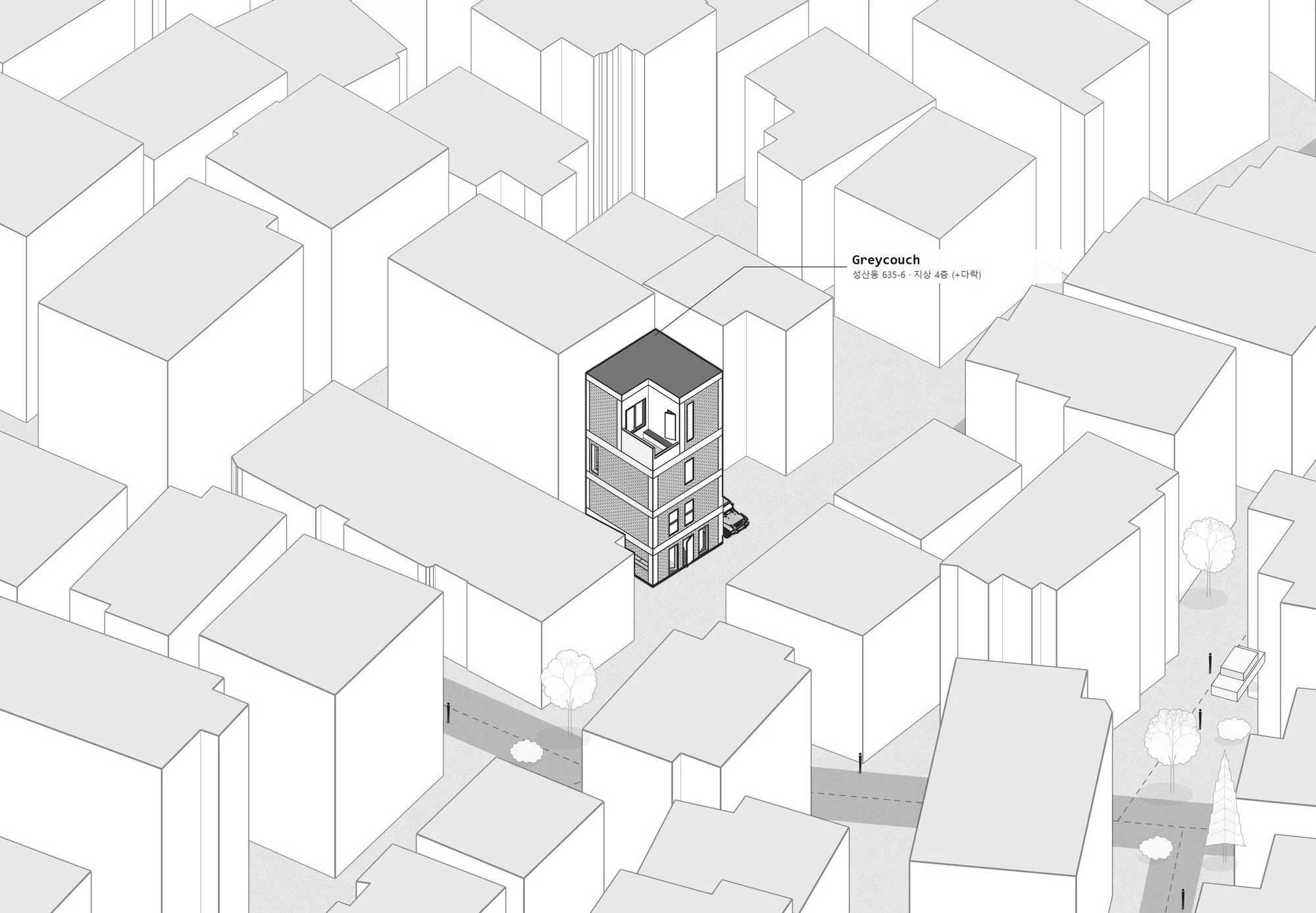
In the neighborhood · 성산동 골목 속 Greycouch
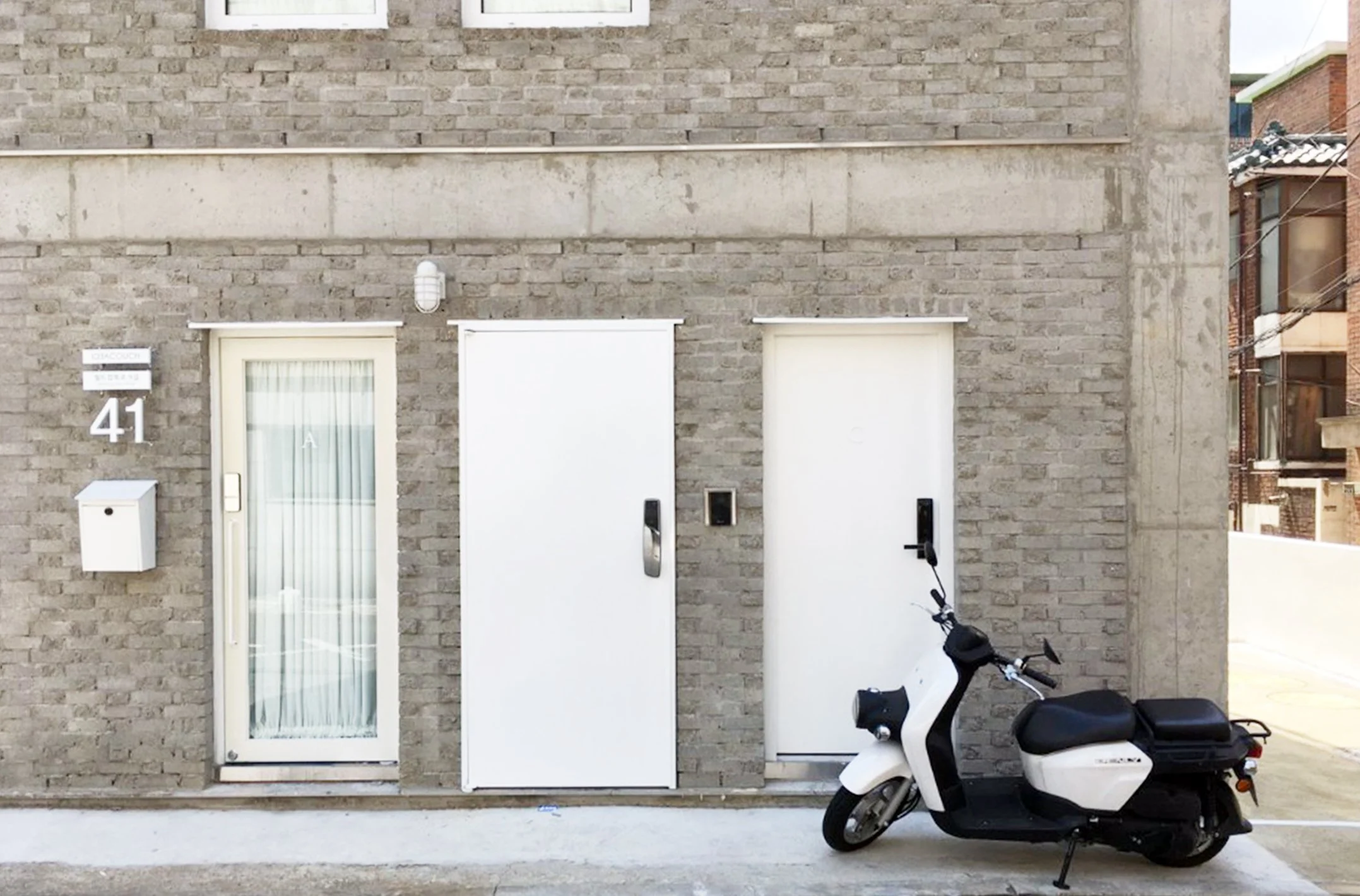
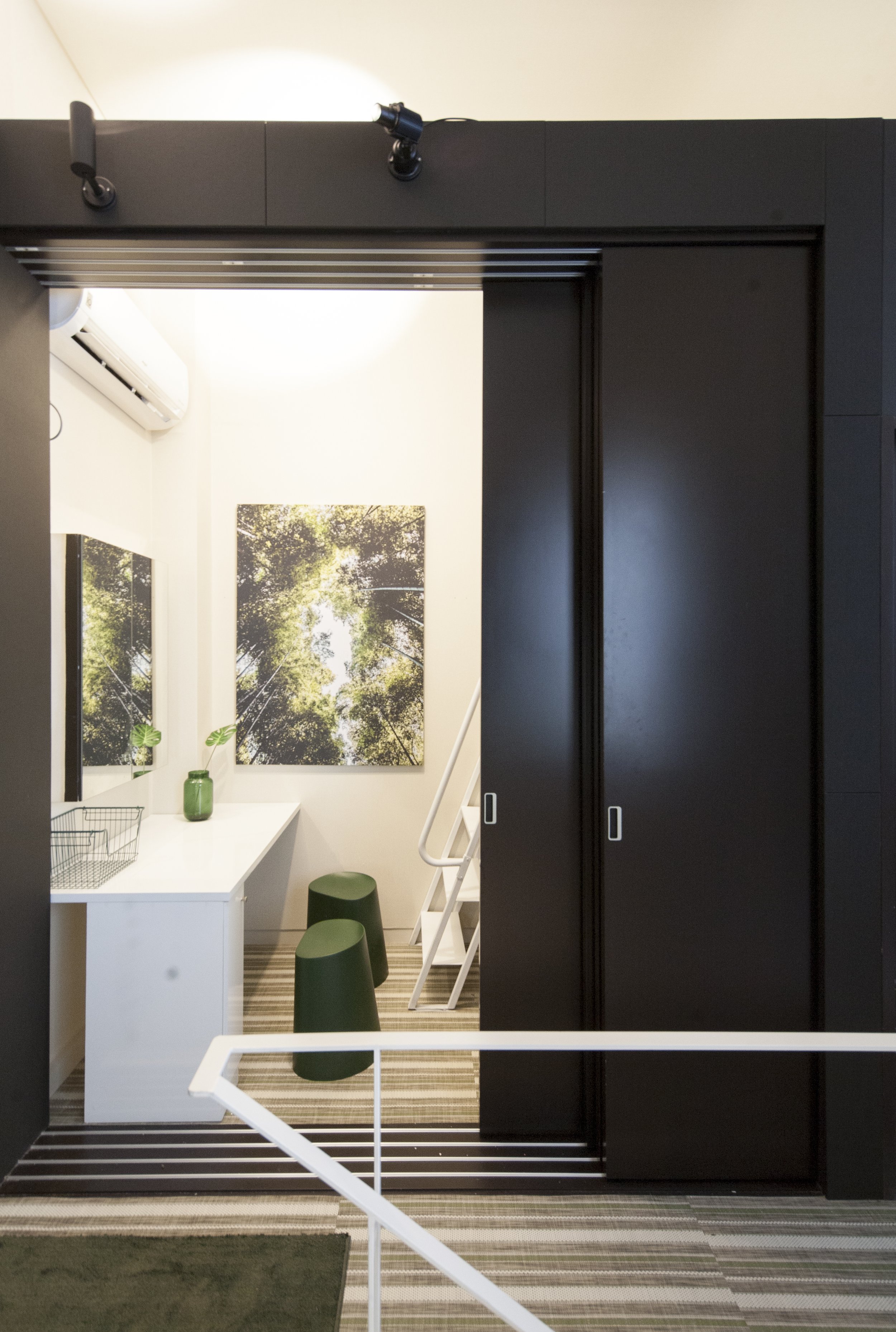
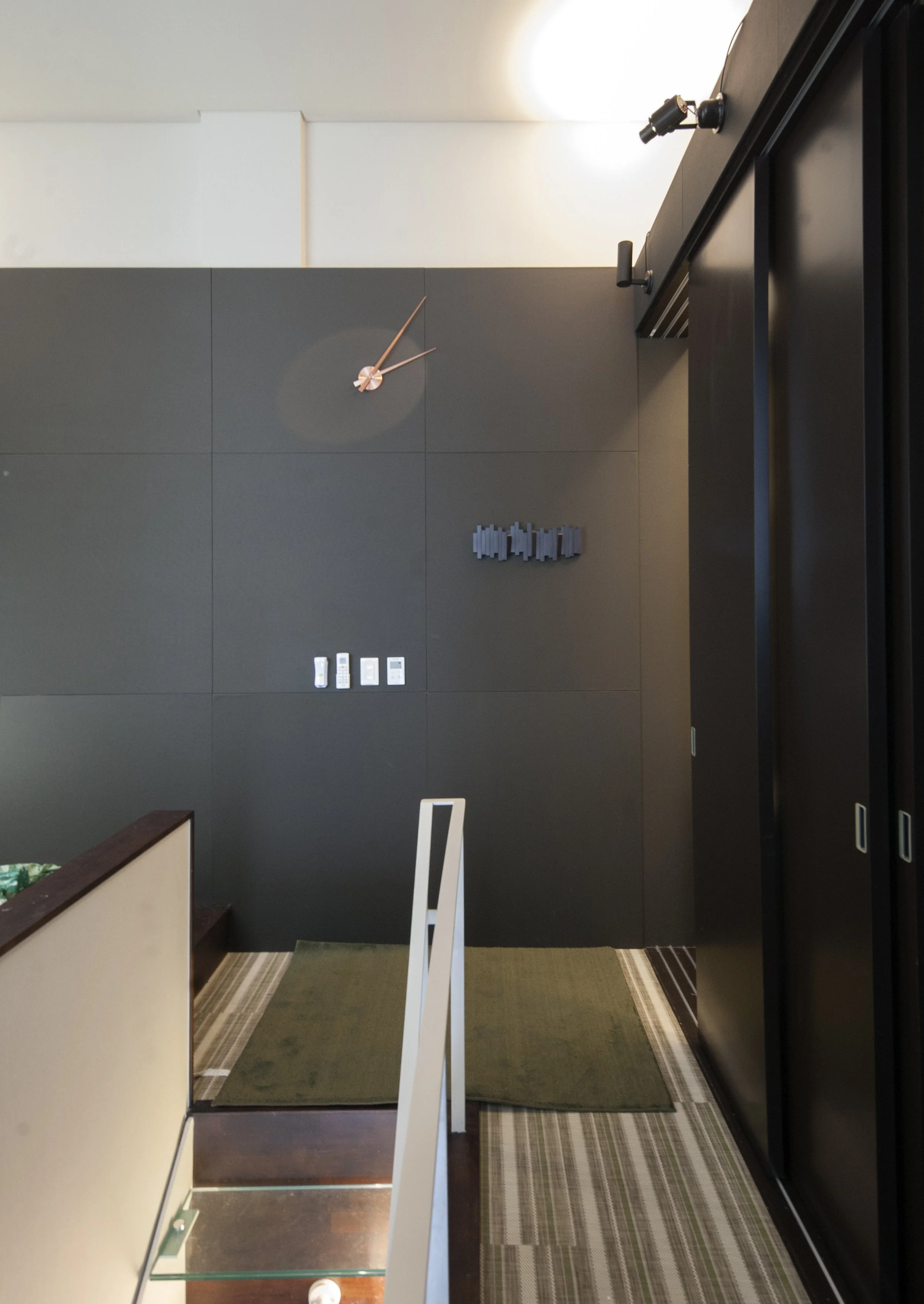
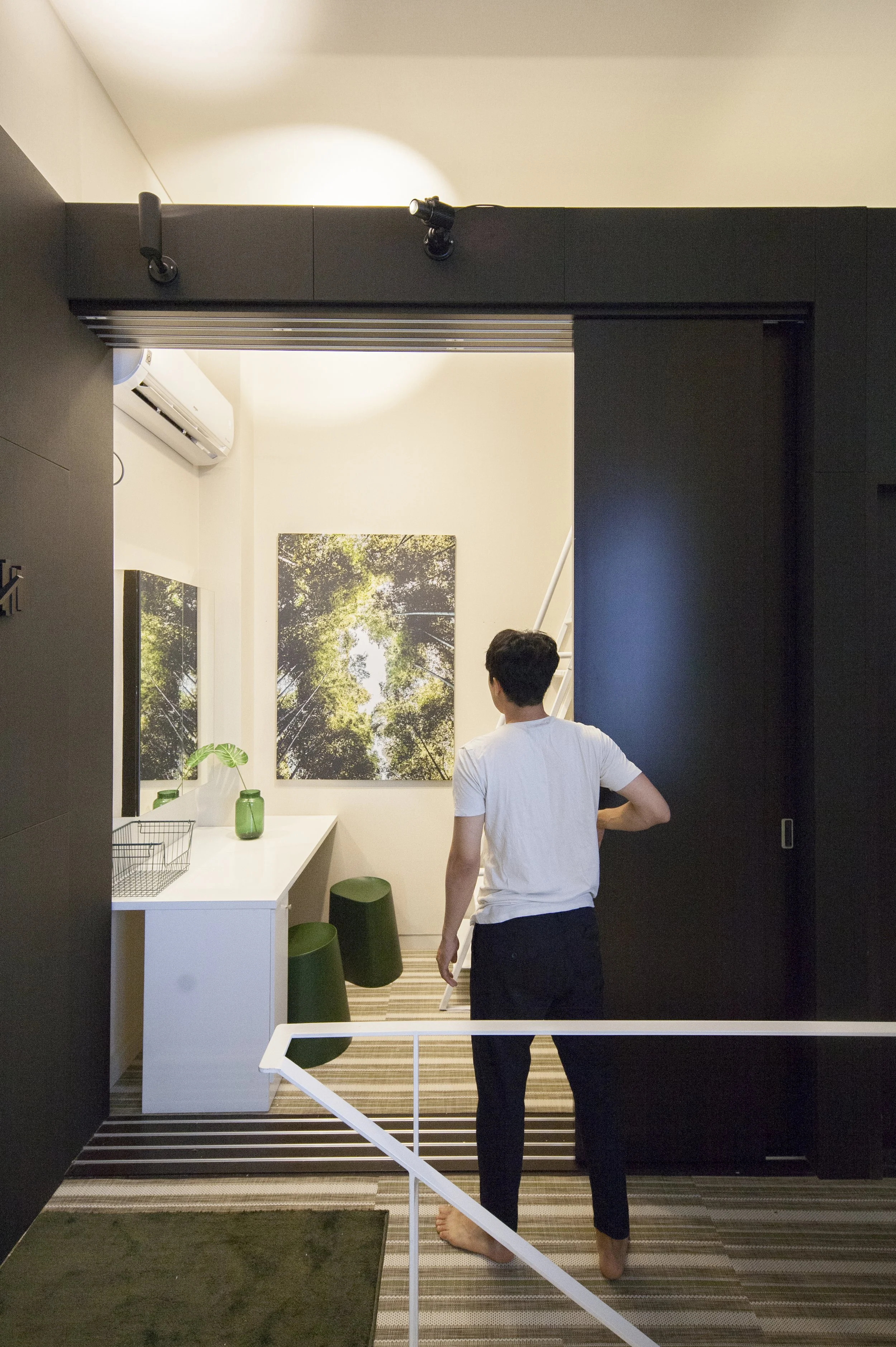
Three doors — quiet clues to the architecture of efficiency inside.
세 개의 문은, 치열하고 효율적으로 나뉜 내부 공간의 단서다.
If the Walls Changed
벽을 바꾼다면
Same columns, same floors, different walls. The images below are AI renderings of what the frame allows.
기둥과 바닥은 그대로 두고 벽만 바꾼 모습입니다. 아래 이미지는 AI 렌더링입니다.
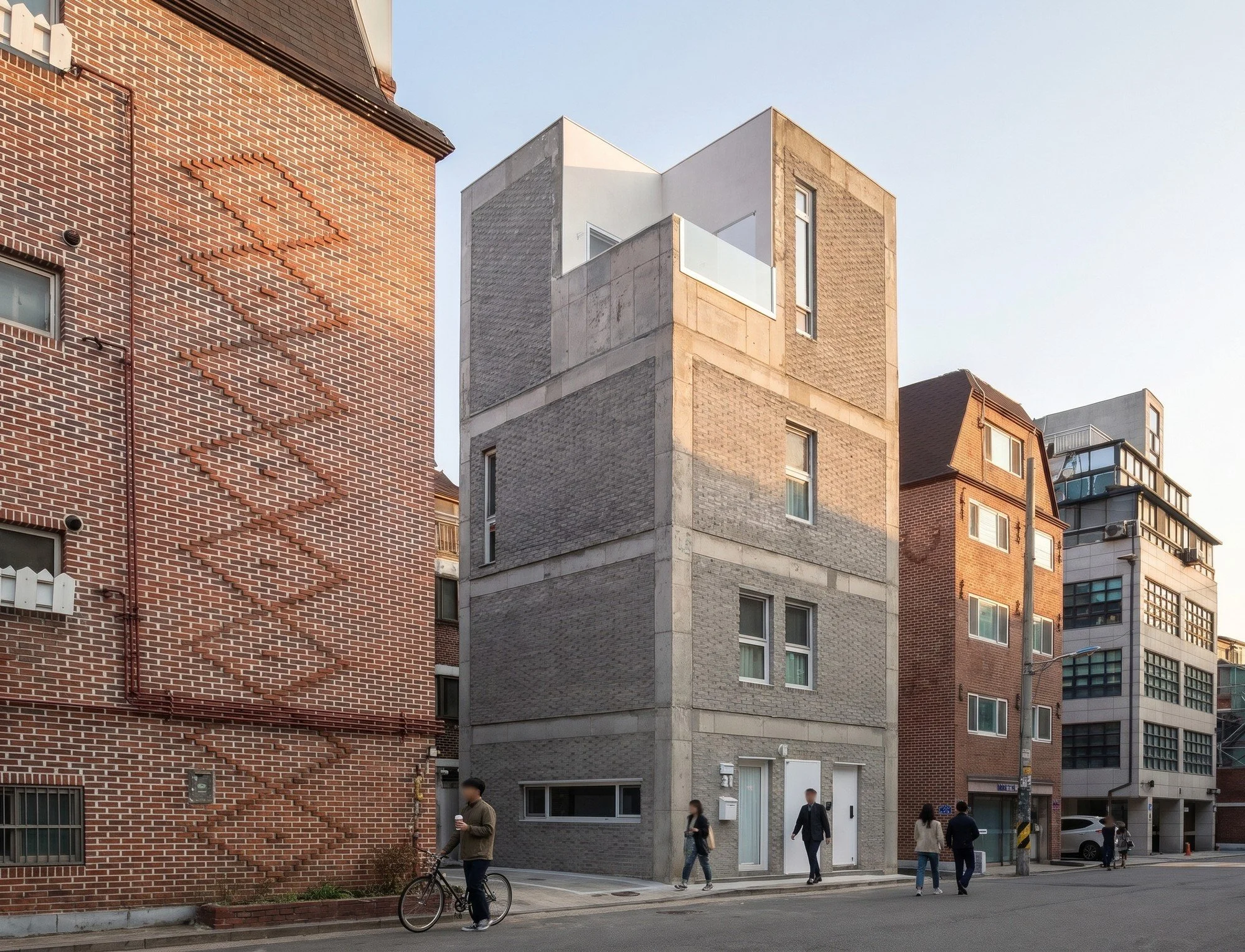
Today: cement brick · 지금의 시멘트 벽돌 · AI rendering
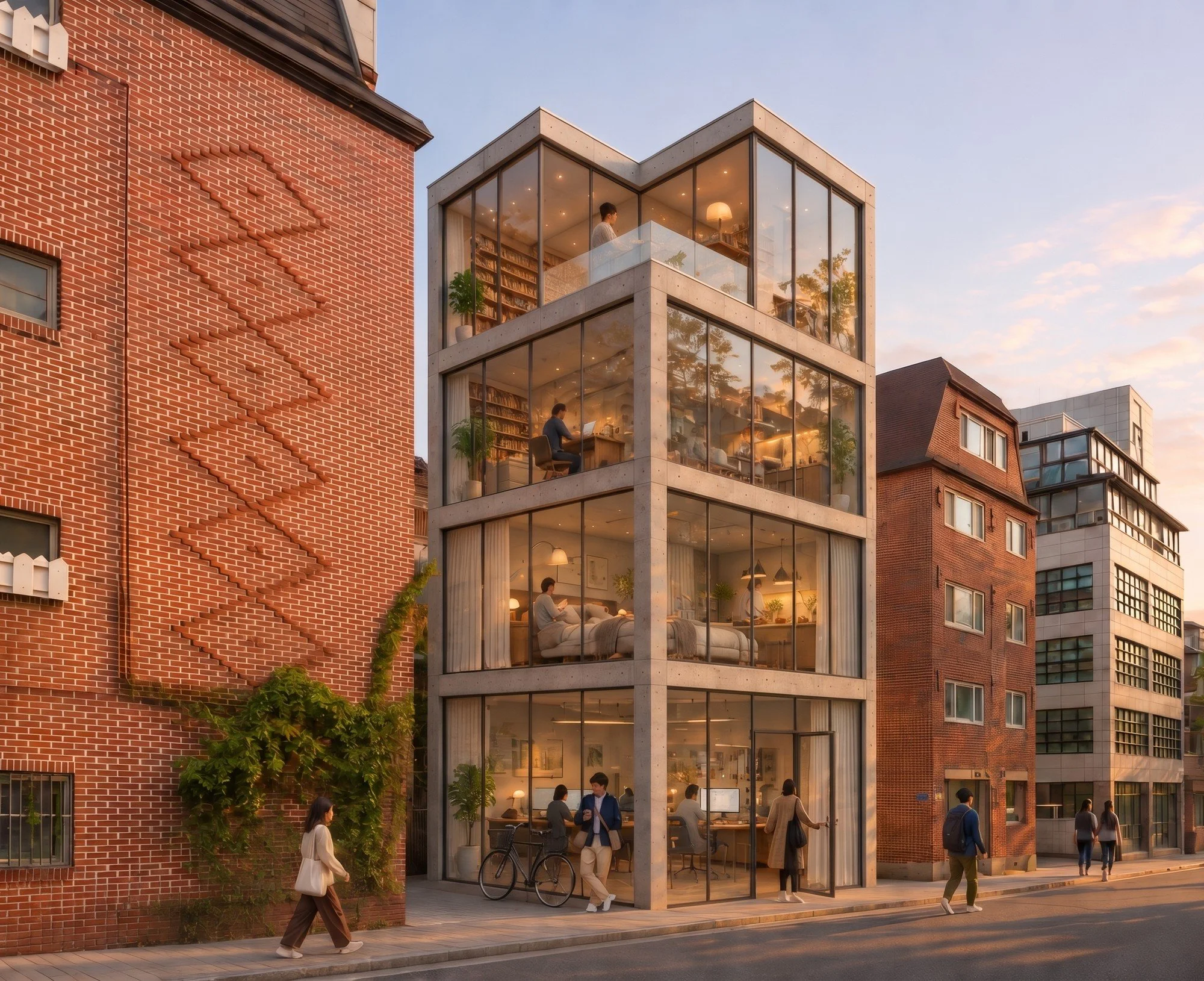
Glass curtain wall on every floor · 전체 통창 · AI rendering
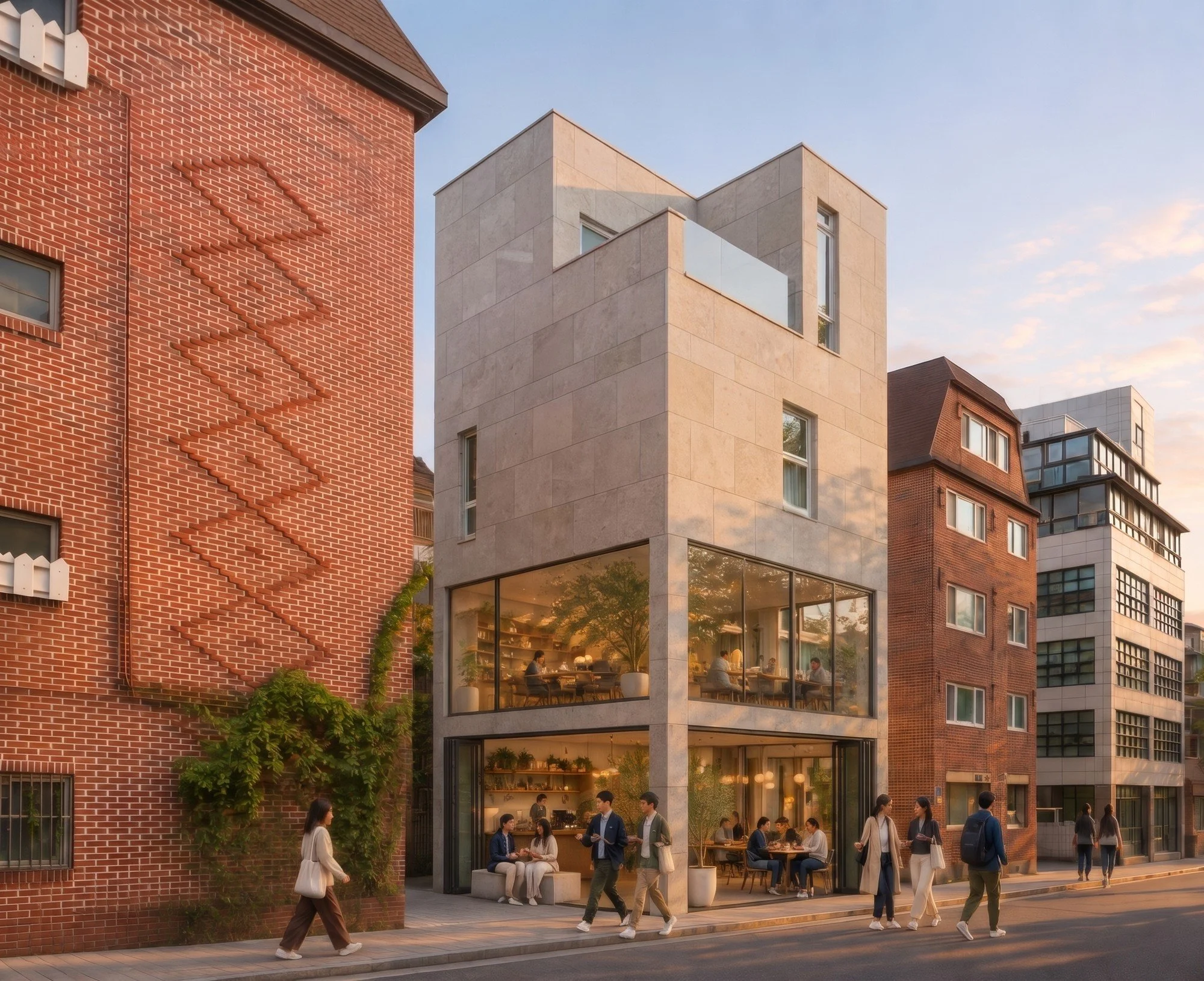
Folding doors, glass, stone · 1층 폴딩도어, 2층 통창, 3·4층 석재 · AI rendering
Stacked Privacy
세로로 쌓인 단계
I had not yet thought of Privacy Tiers when I designed this house, so I cannot say I applied them. Looking back, it is close to those tiers stacked vertically: an office on the first floor where outsiders come and go, a shared living room and kitchen on the third, and a private room above and below.
Privacy Tiers는 Greycouch 이후에 생각한 개념이라, 그때 적용했다고 말할 수는 없습니다. 지나고 보니 이 집은 거의 그대로 Privacy Tiers를 세로로 쌓은 모양이었습니다. 바깥사람이 드나드는 1층 사무실, 함께 쓰는 3층 거실과 주방, 그 위아래로 혼자의 방이 있는 2층과 4층입니다.
This house led to Greycouch II, now Potato Alley.
이 집은 Greycouch II, 지금의 Potato Alley로 이어졌습니다.
Concrete logic, brick honesty

용도 | Use
단독주택, 제2종 근린생활시설(사무소)
Single-family House, Neighborhood Living Facility (Office)
구조 | Structure
철근콘크리트조
Reinforced Concrete Frame
대지면적 | Site Area
66.0㎡
건축면적 | Building Area
35.45㎡
건폐율 | Building Coverage Ratio
53.71%
연면적 | Total Floor Area
129.38㎡
용적률 | Floor Area Ratio
196.03%
건물높이 | Building Height
14.1m
매각 | Sold
June 2020 (2020년 6월)
Architect
Joyul Architecture
Contractor
Design Factory 9mm
Client
Potato Alley
Year
2017